
COMMENTARY / OPINION

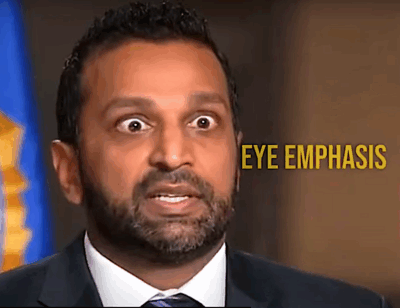
Dan Bongino Just Made A STUNNING Post — He’s Being Held Hostage?! [21:49]
Highlights
🕵️♂️ Dan Bongino and Kash Patel reversed their stance, backing the official Epstein narrative, causing public outrage.
🚨 The Epstein scandal involves alleged global intelligence blackmail operations involving elites and intelligence agencies.
📉 The supposed Epstein files and evidence remain largely undisclosed or heavily redacted, leading to distrust of official investigations.
😶 Bongino’s interview displayed nervous body language, fueling suspicions of coercion or “hostage video” tactics.
⚠️ Public criticism centers on government failure to protect victims and suppress truth about Epstein’s network.
🤔 Theories suggest Epstein was an intelligence asset for Middle Eastern and other agencies, not just an isolated figure.
💥 The video urges viewers to question official accounts and keep pressure on governments to release all information.
Key Insights
🔒 The sudden stance reversal by Bongino and Patel signifies possible external pressure: Their previous firm criticism gave way to a “trust us” narrative, which analysts interpret as evidence they might be under coercion or engaging in damage control to align with a broader cover-up. This has broken trust among many followers who demand transparency rather than vague assertions.
🕵️♀️ Epstein’s connections surpass a lone criminal, implicating international espionage: The suggestion that Epstein was a witting or unwitting intelligence asset introduces a complex geopolitical angle, involving Middle Eastern intelligence and possibly the CIA and Israeli services.
[Ed.: IMHO, it is very obvious that the Deep State simply told Patel and Bongino, that if they proceed much further on the Epstein story, or the assassination attempt story, they will be dead men along with their families. Nothing more, nothing less. That was ‘the deal’. If it happened to me, I’d turn around 180 degrees too, and lie through my teeth, as well! Let’s face it Bongino and Patel didn’t just turn evil overnight. Imagine how hard it was for them to have done that hearing! The poor fucks.

How Can We Trust G-d at a Time Like This? By Mordechai Sones
‘When it is necessary to punish one who deserves it, then his capacity to trust G-d is taken away from him’
May 23, 2025
Regarding bitachon, or trust in G-d, a fundamental question arises: does it merely signify a belief in the Creator’s ability to do good and deliver us from trouble, or does it imply a deeper confidence that He will actually intervene, leading to complete peace of mind and an absence of worry?
Contents
Peace in the Face of Adversity
The Deeper Meaning of Bitachon
Practical Lesson for Life – and Redemption
As explained in Chovos HaLevavos, “the essence of bitachon is peace of mind, complete trust that He will do what is good and right for him in that matter.” However, understanding the basis for such certainty is crucial. Even if G-d explicitly promises something, there is always a possibility the promise might not be fulfilled due to a person’s sins. This concern is amplified when there’s no explicit promise, especially since “there is no righteous person in the land who only does good and does not sin.” Even our forefather Yaakov, despite G-d’s promise, feared that his sins might cause him to forfeit divine protection.
The Foundation of Bitachon
This issue requires further explanation. The foundation of bitachon in G-d is the emunah (faith) that everything originates from the Creator. Therefore, when one experiences difficulty or distress, it is not due to any external control, G-d forbid, from an oppressor; rather, everything comes from Heaven. With this understanding, one can be completely at ease. If a person deserves no harm, the Blessed One will surely save him, even when there appears to be no natural way out, for G-d can change nature.
Peace in the Face of Adversity
Even if a person is not eligible for kindness and deserves punishment, he can still maintain complete peace. This is because he knows with certainty that his distress does not originate from any human messenger, but solely from the Holy One. These troubles occur because his relationship with G-d was somehow lacking. Consequently, such a person fears G-d alone and understands that the situation is ultimately for his good. Even the punishments mentioned in the Torah are acts of kindness from the Holy One, designed to cleanse a person of the blemish caused by his sin. Thus, there is no room for worry or fear.
Reconciling Trust and Sin
It is important to understand that these concepts do not contradict each other. One can completely trust Hashem even while acknowledging the possibility of having sinned and not meriting salvation. This understanding is not inferior to the composure derived from knowing that everything that happens comes from G-d.
Commentators, referencing the Midrash, state that “it is appropriate not to fear.” They interpret this to mean that Yaakov and Moshe, who experienced fear in isolated instances, were afraid of the messenger bringing the trouble, not G-d. Yaakov feared Esau, as the verse states, “And Yaakov feared greatly and was distressed (and therefore) he divided the camp.” Similarly, G-d told Moshe not to fear Pharaoh. This type of fear, they argue, indicates a lack of complete confidence in G-d.
The Deeper Meaning of Bitachon
However, this understanding of bitachon is not entirely sufficient. The true measure of simple trust is not just a state of peace of mind; it is also the certainty that G-d will be good to a person in a visibly manifest way.
But according to this explanation, practicing bitachon in its fullest sense might not apply to the majority of the Jewish people, as “who is a righteous person in the land who does good and does not sin” – who can truly satisfy himself that he is worthy of G-d’s grace? For most, therefore, the practice of bitachon primarily involves maintaining peace of mind, knowing that everything comes from the Creator, even if it is not a visible and manifest good.
According to this understanding, only truly righteous individuals, complete in their divine service, need not fear that they might have sinned. According to this, only they can be confident that visible and revealed good will come to them.
G-d’s Unending Kindness
However, in Chovos HaLevavos (explaining “the causes that make bitachon possible”), it is written: “The One in whom we trust represents the ultimate expression of kindness – to those who deserve it, and to those who do not deserve it – and His way of giving is constant, and His kindness continuous, never ending or ceasing.” If this is the case, then bitachon is founded on the fact that G-d, the Blessed One, is also good “to those who do not deserve it.”
However, further explanation is needed: Although G-d’s mercy extends even to those who “do not deserve it,” it is still possible that one deserves punishment for his misdeeds. What, then, is the basis for bitachon, for a person to be confident that G-d will be good to him, even if he does not deserve it?
“Cast Your Load Upon G-d”
This will be understood according to the words of the Tzemach Tzedek (quoted several times by the Rebbe Rayatz), who answered one who begged him to awaken heavenly mercy for a dangerously ill patient: “Tracht gut – vet zein gut” (“Think good – and it will be good”). It follows from his words that the very thought that it will be good (which is bitachon) brings about good results (openly, manifestly).
Let us clarify the meaning of these words:
The duty to trust G-d, which we are commanded, is not merely a detail (or automatic result) of the belief that everything is in the hands of Heaven, and that G-d is merciful and compassionate. If it were, there would be no need for a special mitzvah regarding this. Rather, this obligation is a separate form of divine service unto itself. Its essence and definition are that a person trusts and relies on G-d, to the point where he entrusts his entire fate to G-d, as the verse says, “Cast your burden on G-d, and He will be your support,” for he has no one else in the world to lean upon for support besides Him.
One could say that this is the intention of the Chovos HaLevavos when it describes bitachon as being “like a slave imprisoned in his master’s dungeon,” where the prisoner’s only hope is in his master, who “is completely in control of him, and no one can hurt him or help him besides his master.” Therefore, it is understood that this belief in G-d is such that the natural situation makes no difference whatsoever, and even if according to the ways of nature one cannot be saved, he still trusts in G-d, Who is not limited by the laws of nature.
Bitachon Requires Effort
And this in itself is the basis for a person’s confidence that G-d will benefit him with visible and revealed goodness, even if he is not worthy of this grace.
The meaning of bitachon is not that one believes that since G-d is without measure or limit, whether towards the worthy and the unworthy, therefore, he will receive the grace of G-d without any effort on his part (because this would negate the entire concept of reward and punishment). Rather, bitachon is work and effort inside the depths of one’s soul, and it is what brings the grace of G-d that comes as a result of this effort to have trust in G-d.
As a result of the person truly and deeply trusting in G-d alone, to the point of not worrying at all, then this awakening itself works so that G-d reciprocates and acts with him in this way, to benefit him (even if otherwise he would not be worthy of it).
And so it is explained in the Ikkarim: “Even if he is not worthy on his own, the path of bitachon draws down undeserved kindness to those who trust in G-d.”
“If one would hope properly, the kindness would not be withheld from G-d.” And so in Sefer Kad Kemach it says: “One who trusts in G-d will be saved from the trouble as a reward for his bitachon, even though he deserved the tribulation to come upon him.” And further in Yalkut Shimoni Yeshayahu: “There are among you fearers of Heaven; trust in My name, which will stand for you. Anyone who trusts in My name, I will save him.”
And it says in Keser Shem Tov: “When it is necessary to punish one who deserves it, then his capacity to trust G-d is taken away from him.”
This, then, is the meaning of the commandment, “Trust in G-d” – that a person should cast his trust on G-d, the Holy One, Who will benefit him with visible and revealed good. When he trusts solely in G-d (without making calculations whether it is possible for him to be saved, etc.), then Heaven acts towards him measure for measure: G-d protects him and has mercy on him even if, according to his calculations, he does not deserve to be benefited with visible and revealed good.
This is the meaning of the Tzemach Tzedek’s words, that bitachon itself will bring good results; it is not merely a side issue to have trust in G-d, but rather, that is the very definition of the bitachon that we were commanded.
Practical Lesson for Life – and Redemption
From this, we also learn a practical lesson for life:
When a person encounters obstacles and setbacks to keeping the Torah, he must know that eliminating these obstacles and setbacks depends on him and his behavior. And if he has complete confidence in Hashem, that He will help, that He will be good, until he is completely calm, with no worry at all (and of course, along with this, he does everything that depends on his in the natural way to eliminate these obstacles) – then we have been promised that “Tracht Gut Vet Zein Gut,” (think good – and it will be good), that indeed, it will actually be so, that all the obstacles and hindrances will be removed, and it will be good for him in practice, in the visible and revealed goodness, to our physical eyes; revealed good in this world.
And just as in the redemption from Egypt it is said that “in the merit of bitachon Israel was redeemed from Egypt,” so it is in this redemption from our last exile, as stated in the Midrash that “they are worthy of redemption as reward for the bitachon itself,” – so it will be for us, in the merit of bitachon of the sons of Israel, “My salvation is near to come,” we become worthy that the Blessed G-d will redeem us, in the true and complete redemption, very soon in our own days.
Based on the teachings of the Lubavitcher Rebbe.
An Open Letter to the Capital Jewish Museum Murderer JOSHUA HOFFMAN
You don’t seem to understand what kind of people we are.
MAY 22, 2025 The Future of Jewish
You shouted “Free Palestine!” as you were arrested, just moments after you gunned down two Jewish staff members of the Israeli Embassy in Washington, D.C., as they were leaving an event at the Capital Jewish Museum.
You believed that your bullets would send a message. And they did — just not the one you hoped for.
You thought that by targeting unarmed Jews on American soil, again, you would terrify us, fracture us, silence us.
You failed.
Because here is the truth, whether it suits your narrative or not: We are not afraid. We are not broken. We are not leaving.
In fact, we are more united than we have been in generations.
You see, after October 7th — after Jewish babies were burned alive in their beds, women gang-raped on Facebook Live, and entire families slaughtered in their homes — we did not cower. We mourned, we buried our dead, and then we stood up taller.
You don’t seem to understand what kind of people we are.
We are the descendants of Jews who built hospitals and schools while under siege. We are the grandchildren of Holocaust survivors who crawled out of mass graves and created families, nations, futures.
We are the children of Israel, a miracle more than 2,000 years in the making that has survived seven wars, three intifadas, and endless terror — and still sends humanitarian aid to the very people whose governments pledge to destroy us.
We are the Jews of Washington, Paris, London, Mexico City, Toronto, Sydney, Buenos Aires, Johannesburg, and Jerusalem. And we are done apologizing for being alive. We are done explaining why we deserve safety. We are done pretending that hatred against Jews is just “political.”
There is nothing “liberatory” about murdering Jews. There is nothing “progressive” about shooting diplomats in the back. And there is nothing “anti-Zionist” about stalking Jews at a museum in a city that once swore “never again.”
You chose a Jewish museum for your violence. Of course you did. Antisemites have always attacked our memory as much as our bodies.
You’ve burned our books. You’ve banned our speakers. You’ve barred sales of real estate to us and our entry into country clubs. You’ve targeted our places of remembrance. But let me remind you: Jewish history does not end in museums. It lives in our homes, our holidays, our prayers, our army, and our future. We are not artifacts; we are architects of a better world.
You screamed “Free Palestine” — as you shed Jewish blood. But the world sees your slogan now for what it truly is: not a call for peace, but a license for murder. If you wanted peace, you’d protest violence, not commit it. If you valued life, you wouldn’t glorify death. If you wanted freedom, you wouldn’t target the only free country in the Middle East.
You didn’t care that the victims were not soldiers. You didn’t go to the battlefield. You waited outside a museum and fatally shot two people who weren’t armed. They were in a museum, not on a battlefield. To you, any Jew is a target — whether in Sderot or D.C., Tel Aviv or Toronto. There’s a word for that, and it isn’t resistance; it’s cowardice.
But you’ve reminded us of something essential: We’re one people. Your hatred doesn’t differentiate. And neither does our loyalty. When you attack Jews in Washington, you awaken Zionists in Paris. When you spill Jewish blood, you forge Jewish unity.
And let’s not pretend like this happened in a vacuum. For decades, the mainstream media has been running a global blood libel against Israel, peddling unverified casualty figures from Hamas, airbrushing the atrocities of October 7th and the barbaric conditions of our hostages in Gaza, and portraying Israel as a genocidal monster.
They’ve handed our haters a moral permission slip. They’ve painted a target on every Jew walking out of a synagogue, a museum, a school. They broadcast “Israel bombs hospitals” and “Israel kills Palestinian children,” and then Jews are attacked across the world. They tweet about “starvation” in “Palestine” and some deranged Jew-hater picks up his gun. The press may wash its hands after every headline, but we are the ones who bleed.
They habitually take the side of the mostly jihadist Palestinians instead of the mostly peaceful Jews. They have given plenty of empathetic facetime to those who chant genocidal slogans and glorify martyrdom over a democratic nation that consistently warns civilians before striking terrorist targets. They contort themselves to “contextualize” the slaughter of Jews, while stripping away every ounce of context from Israel’s right to defend itself.
It is a grotesque inversion of morality: Terrorists are called “militants,” hostages are a measly afterthought, and Hamas propaganda is reported as eyewitness news.
The result? A narrative that justifies violence against Jews everywhere — at embassies, on college campuses, on subways, and in synagogues. They imply “genocide,” and mobs surround Jewish communities. They hint at “apartheid,” and someone decides a museum is a shooting range.
When you treat Israel as a uniquely evil state and Palestinians as a uniquely blameless people, you don’t just skew the truth; you license the hatred, with Jews around the world paying the terrible price.
And, to those watching in silence: We see you, too. We see which voices are loud when it’s socially or politically convenient — and which ones fall silent when Jews lie bleeding on the pavement. We know that if the murderer was White and the victims Black or Asian, hundreds of thousands of people would take to America’s biggest cities the very next day proclaiming “Black Lives Matter” and “Stop Asian Hate.”
But when it is Jewish lives taken, especially in the name of “Palestine,” we hear mostly crickets and a few messages of private support.
We ask you only this: If you claim to be against hate, then be against all hate, not excluding the kind that targets Jews.
You may wrap your hatred in slogans and hashtags, but the stench is unmistakable. When your activism ends in Jewish corpses, it’s not justice; it’s Jew-hate. When your target is a Jew simply for existing, your flag doesn’t matter. You’re no freedom fighter. You’re just another chapter in a long, ugly history.
We have outlived Pharaohs and Pogroms, Inquisitions and Intifadas. And in every generation, our answer is the same: not just survival, but renewal. We don’t just bury our dead; we build schools in their names. We don’t just mourn; we multiply. We sing, we write, we invent, we love, we plant, we rebuild. You bring bullets. We bring babies.
To my fellow Jews reading this: You are not alone. Not now. Not ever. Whether you wear a kippah, light Shabbat candles, or only recently began reconnecting with your identity, know this: Being Jewish is not a liability. It is a legacy.
Be proud of who you are. Take part in the global Jewish awakening. Rise in synagogues, streets, and college campuses, in Israel and in the Diaspora. We are not confused. We know exactly who we are. We are Jews. We are Zionists. And we are unapologetically proud of that.
But don’t mistake our pride for arrogance, our resilience for apathy, and our strength for callousness. The truth is: We feel every loss. We mourn every death. We carry every scar. We simply refuse to let our pain become our identity. We transform it into purpose.
And, ultimately, we do not fear our miserably pathetic haters. We pity them. Because, in trying to erase us, they only reveal how desperately they wish they could be us: proud of who we are, connected across oceans, and blessed with a beautiful homeland.
So let this be clear: We will not be intimidated out of our communities. We will not be victims in silence, or Jews only in hiding. We will sing Hatikvah1 louder. We will light candles in the dark. We will wear our Stars of David with confidence. And we will raise our children to know that being a Jew is not a risk, but a blessing.
So, thank you for reminding us who we are. Now go rot in prison.
[Ed.: Was it really worth it for him to sacrifice his own life to shoot two unarmed Jews in the back for “Palestine”? Is there anybody anywhere who gained anything from this action?]
The Non Nuclear Iran – a Strategic Threat to the US Ambassador (ret.) Yoram Ettinger, “Second Thought: a US-Israel Initiative”
May 21, 2025
The China-Iran-Russia Axis
*The 2025 Threat Assessments issued by the US Department of Homeland Security, the FBI and the Director of National Intelligence state: “China, Russia and Iran will remain the most pressing foreign threats to our critical infrastructure…. We expect [non-nuclear] Iran to remain the primary sponsor of terrorism and continue its efforts to advance plots against individuals – including current and former US officials – in the United States…. China, Iran, and Russia will use a blend of subversive, criminal, and coercive tactics to undermine confidence in US democratic institutions….”
*In March, 2025, Iran, China, and Russia challenged the US’ strategic posture in the Persian Gulf and the Indian Ocean, conducting another joint naval drill in the Gulf of Oman, which is critical to the global supply of oil, a vital trade route between Asia and Europe, and an epicenter of anti-US Islamic terrorism. Iran’s rogue collaboration with China and Russia extends beyond the Persian Gulf and the Indian Ocean all the way to Africa, Latin America and the US homeland. In addition, the military, financial and diplomatic cooperation with Russia and China has bolstered Iran’s mastery in economic sanctions evasion, which includes deceptive oil shipping practices.
*According to UANI (United Against Nuclear Iran), ”Since the 1979 Islamic Revolution, China has been willing to sell arms, ballistic missile components, and anti-access/area denial weapons systems to Iran. In the 1980s and 1990s, China provided Iran with nuclear technology and know-how that assisted its development of a nuclear weapons program…. China has steeply increased the quantity of its oil purchases from Tehran and as the main purchaser of Iranian oil, enjoys considerable leverage over Tehran…. In 2021, Iran was granted further access to Chinese satellite navigation systems for military purposes…. In March 2022, the U.S. Treasury Department revealed that Iran procured from Chinese suppliers machines to process nitrile butadiene rubber [ideal for a range of automotive and aerospace applications] and an inert gas jet milling system used for making solid propellant [used in various applications like missiles and rockets]…. In 2021, Beijing and Tehran signed a 25-year cooperation agreement… centered on the exchange of heavily-discounted Iranian crude oil for hundreds of billions of dollars in Chinese investment in Iran. The deal also proposed banking, military, and security cooperation….”
Iran’s Anti-US Ideology in Action
*A May 6, 2025 brief by The Atlantic Council concludes:”…. The threat of the Iranian regime is not rooted in its nuclear ambitions, but in Tehran’s ideological foundation…underpinning Iran’s nuclear ambitions beyond enrichment levels, centrifuge counts, and sunset clauses…. Iran’s nuclear program is not simply about energy or military deterrence, but a tool for advancing a revolutionary ideology…. At the core of its ideology is an enduring hostility toward the USA and an obsession with the destruction of Israel…. The regime sees both as geopolitical threats and ideological antitheses. The USA, “the Great Satan,” symbolizes liberal democracy, capitalism, religious pluralism, and gender equality. Israel, “the Little Satan,” presents a an intolerable affront: a sovereign Jewish state thriving in the heart of what [Muslim] hardliners see as Islamic land…. Israel is the primary obstacle to their ideological vision of regional domination…. Israel’s very existence undermines [the Ayatollah] belief in a historical and religious destiny that dates back to the Islamic conquests of the seventh century….
“In a shift of policy which can be explained as “taqiyyah” (religious dissimulation), [The Supreme Leader] Khamenei permitted negotiations with the Trump administration…. The concepts of taqiyyah and “khod’eh” (strategic deceit) are deeply embedded in the regime’s political playbook and play a role in this malleability. These tools allow the regime to maintain flexibility in negotiations and justify sudden policy shifts with religious cover….”
*The anti-US apocalyptic Shia vision of the non-nuclear Islamic Republic of Iran is featured prominently in Iran’s K-12 school curriculum, mosque sermons and official media. This vision mandates the toppling of all Sunni regimes, and the subjugation of the “infidel” West and primarily “The Great American Satan.” Hence, the Ayatollah regime’s support – in collaboration with Russia and China – of proxy terror groups and drug traffickers in the Persian Gulf, Horn of Africa, North Africa, West Africa and Latin America, along the US-Mexico border and on US soil.
*Since February 1979, when it toppled the pro-US Shah, the non-nuclear Ayatollah regime has focussed on exporting its anti-US revolutionary Shia vision, emerging as the world’s leading anti-US epicenter of wars, terrorism, drug trafficking and the proliferation of advanced military systems.
*Since the early 1980s, the Ayatollah regime’s chief partner in its penetration of Latin America – the US’ soft underbelly – has been Hezbollah, which has played a key role in drug trafficking, money laundering and terrorist training, especially in the tri-border areas of Argentina-Paraguay-Brazil and Chile-Bolivia-Peru.
*The non-nuclear Ayatollah regime has fuelled Shia terrorism in Saudi Arabia’s Eastern Province, which is the major Saudi oil region, and the home of the largest Shia population of Saudi Arabia (a 30% minority in the province and a 15% minority in Saudi Arabia). Similar acts of Iranian subversion and terrorism have taken place in the pro-US Bahrain (the site of a major US naval base), where a 65% Shia majority is ruled by the Sunnis, and in Kuwait and its 35% Shia minority. In addition, the Ayatollah regime has financed, supplied and trained Yemen’s Houthi terrorists and their insurgency against Yemen’s government and Saudi Arabia, as well as Iraq’s Kataib Hezbollah terrorists, who have targeted US installations in Jordan and the Gulf area.
The Bottom Line
*The cardinal challenge facing US negotiators is not the details of the nuclear and ballistic aspirations of the Ayatollah regime. The cardinal challenge is to realize that the sophisticated and polished Iranian diplomatic discourse is subordinate to a deep, historic, religious, ideological and strategic commitment to a long-term apocalyptic ideology,which has precluded strategic transformation.
*Moreover, against the backdrop of a 47-year-old self-destructive diplomatic option and reversible economic sanctions, is it reasonable to persist with these two options, which have systematically clashed with reality?
*Furthermore, in view of the 47-year-old rogue walk – fogged by a smooth talk – is it reasonable to expect the Ayatollah regime to abandon its 1,400-year-old fanatic, imperialistic, apocalyptic ideology and be transformed into a good faith negotiator, renouncing the use of taqiyyah, embrace peaceful-coexistence with all Sunni Arab regimes and Israel, desist from any collaboration with terror entities and drug cartels, and forego its long-term ideological goal of bringing The Great American Satan to submission?! Could the non-nuclear Ayatollah regime be amenable to Money Talks, while discarding Ideology Walk?!
Europe’s Extreme Swing From Auschwitz to ‘Allahu Akbar’ MARAL SALMASSI
The post-World War II European war on nationalism has made it a safe space for antisemitism.
MAY 19, 2025
European governments are walking a tightrope over an active volcano.
After decades of importing tribal, theocratic, and antisemitic ideologies, our societies have fragmented in ways we haven’t seen since the Second World War. The only political beneficiaries are the Far-Left and Far-Right, whose appeal grows exponentially as the establishment erodes its credibility.
At the heart of this breakdown lies a uniquely European neurosis (post-World War II guilt) and its ideological offspring, neo-universalism. Made in Germany, this moral and psychological phenomenon is the source of Europe’s refusal to deal honestly with Islamic extremism and uncontrolled migration and defend its own cultural identity.
Germany has long been a crucible of powerful ideological systems — some brilliant, others catastrophic. One must understand the German need for predictability, moral order, and system-building to understand its post-war mindset. This national character has produced both Beethoven and bureaucratic genocide.
When ideas take hold in the German mind, they’re rarely moderate. They are developed with rigorous precision, often to their logical (and illogical) extremes. Calvinism and Lutheranism, though born in Wittenberg and Geneva, both took deep root in German soil. These traditions embedded notions of moral rigor, predestination, and an inseparable relationship between divine order and political authority.
Centuries later, we see echoes of these traits in ideologies like Nazism (with its twisted sense of moral destiny) and Marxist communism, conceived by another German thinker, Karl Marx. Today’s neo-universalism, which tries to erase all differences in the name of equality, is merely the latest chapter, an eerie mirror image of old German universalism. Instead of one Reich, we are now offered one global justice paradigm.
Each new ideology emerges as a “corrective” to the last, but always with a new blind spot, a new form of moral arrogance, and a new potential for destruction.
In “Escape from Freedom,” German-Jewish psychologist Erich Fromm traced the authoritarian personality back to Protestant roots and argued that Lutheranism and Calvinism planted the psychological seeds for fascism: an all-powerful God, predestination, and the individual’s desperate need for external validation in a chaotic world provided fertile ground. These movements stripped away the comforting rituals of Catholicism, leaving individuals alone with their guilt — anxious, morally isolated, and primed to seek relief in authority.
The fascist state became a psychological surrogate, a new father figure offering certainty and moral clarity.
Nazism, then, was not a historical accident but a culmination of a long ideological arc. After the collapse of Nazi Germany, the pendulum violently swung back toward socialism and, later, postmodernism.
Postmodernism became popular just as the West had started confronting its past demons. Where guilt had once been internalized through religious authority, it promised freedom through dissolution: no norms, judgment, or cultural superiority. This was, of course, irresistible to a culture desperate to escape its past.
But instead of erasing guilt, postmodernism outsourced it, replacing repentance through truth with penance through relativism:
- If all cultures are equal, none can be blamed.
- If all truths are subjective, none can be defended.
- If all identities are fluid, then national identity becomes outdated and dangerous.
In this moral vacuum, neo-universalism emerged as a secular religion. It promised redemption through openness, diversity, and supranational governance. Its creed was simple: “Welcome the Other, no matter the cost to yourself.”
Thus, in a tragic twist, Islam (the most entrenched patriarchy and imperialist force in recorded history) was recast as the ultimate victim. Despite its rigid theological hierarchy, supremacist doctrine, and 1,300-year history of conquest, Islam became the sacred “Other”: unassailable, untouchable, and immune to critique.
What the West could no longer condemn in itself, it now projected outward, turning its civilizational guilt into a pathological act of appeasement.
Nowhere is this psychological overcorrection more visible than in Germany. After 1945, the nation was not only physically devastated but morally dismantled. The Holocaust and the crimes of National Socialism Left behind a traumatized elite determined to create a utopia, preventing even the possibility of future fascism.
And in every Eden, there is always a serpent — and an original sin.
From this trauma emerged two core beliefs. First, national identity is dangerous. If Hitler used nationalism to justify genocide, then nationalism itself must be inherently toxic. Germans must never again see themselves as unique, sovereign, or special.
And second, universalism equals redemption. The cure for nationalist evil was to dissolve identity altogether through openness, cosmopolitanism, human rights, and integration into supranational structures like the European Union and the United Nations.
This worldview became a civil religion, complete with its metaphysics:
- Original Sin → Colonialism, racism, the Holocaust
- Saints → Refugees, migrants, minorities
- Heretics → Patriots, critics of Islam, defenders of Western values
- Dogma → Equality, multiculturalism, inclusivity
- Inquisition → Media shaming, cancel culture
This doctrine fundamentally ties moral redemption to welcoming the Other — at any cost. Germany is no longer post-national; it is anti-national by design. Its education system, constitution, and public rituals are tailored to curb pride, promote shame, and sacralize diversity.
The state’s leaders speak less of Germanness than European responsibility, global justice, or welcoming culture. The very concept of a cohesive national identity is treated with suspicion, if not outright disdain.
This deep cultural aversion to national identity in Germany finds an unlikely ideological mirror in Islam, a political-theological system that has governed Islamic empires for centuries.
Islam, in its original form, is a supranational project. It denies national allegiances and favors a global Ummah, the community of believers governed by divine law (sharia) — not local custom, secular authority, or ethnic tradition. While Germany sacrifices nationalism to avoid the repetition of fascism, Islam rejects nationalism as heresy against divine unity.
In both cases, the nation-state is delegitimized. In Germany, it is a moral hazard. In Islam, it is a theological obstacle. Where Germany seeks redemption through cosmopolitanism, Islam claims authority through divine universalism.
Yet both frameworks erase the idea of national self-determination and demand submission to a higher, abstract moral order — whether that be global “humanity” or the will of Allah.
This is not to say Germany has “converted” to Islam, but instead that it has created the perfect ideological climate in which Islamism can thrive. The German state has become so allergic to its own identity that it now prefers the presence of anti-nationalist Islam to the resurgence of native cohesion.
In this way, post-World War II guilt and Islamist ideology don’t collide; they converge, creating a power vacuum in which European values are not just eroded but systematically replaced.
In this moral paradigm, Islam is not treated like any other ideology; it is post-colonial, marginalized, non-Western, forever framed as a victim rather than an agent.
But, this could not be further from the truth. Islam is more than a religion; it is a patriarchal civilizational system, a theocratic legal code, and one of history’s most enduring imperialist forces. It colonized vast swaths of the Middle East, North Africa, Central Asia, and Southern Europe. It forcibly converted populations, enslaved millions, and institutionalized second-class status — known as dhimmihood — for non-believers.
And yet, in Germany, criticism of Islam is met with accusations of hate speech. Foreign-funded Islamic associations are subsidized under the guise of integration. Dissenters are prosecuted under laws like Volksverhetzung1. And antisemitic pro-Hamas demonstrations are permitted under the banner of “free expression.” This is the reversal of moral logic: The guilty must be punished, the foreign must be protected.
But this ideological structure is now buckling.
Human beings crave identity, not abstraction. Cultures are not equal, and some, like Islam, actively reject pluralism. Tolerance without reciprocity leads to submission instead of harmony, and Europe’s younger generations are beginning to understand this.
What began as a noble refusal to repeat history has violently metastasized into a self-harming moral fantasy — blind to reality and deaf to the suffering it creates, especially for women, Jews, gays, and ordinary citizens trapped in the ideological ruins of Western self-hatred.
1 A concept in German criminal law that refers to incitement to hatred against segments of the population and refers to calls for violent or arbitrary measures against them, including assaults against the human dignity of others by insulting, maliciously maligning, or defaming segments of the population
Eurotrash and More Abasement: Israel’s Self-Humiliation on the World Stage By Mordechai Sones
By consistently returning to these platforms, Israel reinforces its dependence on external validation
May 19, 2025 Jewish Home News – A nation repeatedly seeking inclusion in global competitions, despite facing snubs, boycotts, and unwelcoming behavior, may be seen as a form of seeking validation from open adversaries. This could suggest that the desire for international recognition and acceptance outweighs preserving national pride.
Each participation, each attempt to compete despite the known risks of humiliation or rejection, is a tacit admission of a need for approval from the very entities expressing animosity. By consistently returning to these platforms, Israel reinforces its dependence on external validation, even if that validation comes at the cost of repeated slights.
The act of competing, despite the high likelihood of encountering unsportsmanlike conduct rooted in political or ideological opposition, betrays a willingness to “swallow pride” for the sake of remaining on the global stage. This proclivity emphasizes the optics of participation, shifting the focus from athletic achievement to the symbolic act of repeatedly presenting Israel debased before a dishonorable and hostile competitor.
Furthermore, pursuing international sporting success under these circumstances is no demonstration of resilience, but rather makes a spectacle of subservience. Repeated exposure to negative treatment, with no significant shift in attitude, projects an image of a nation willing to endure indignities for the sake of participation itself.
Israeli insistence on competing is seen by the nations as nothing but a strategy to curry favor by demonstrating commitment to the rules of international engagement, even when those rules are not equally applied or respected by all participants. The underlying motivation is seen as gaining acceptance or sympathy through persistent engagement, despite the associated humiliations.
Continued participation is not an act of strength, nor a pursuit of universal athletic ideals, but rather as a manifestation of a deep-seated need for acceptance that leads to actions perceived as self-abasing before Israel’s enemies.
Watch: ‘Not America First’ Shapiro Blasts Trump’s $400M Qatar Jet Deal
May 18, 2025 JBN News
President Donald Trump’s desire to accept a $400 million jet from Qatar didn’t sit well for Jewish political commentator Ben Shapiro who called the arrangement “skeezy stuff” and questioned how it aligns with the president’s “America First” policy.
“Taking sacks of goodies from people who support Hamas, the Muslim Brotherhood, al-Jazeera, all the rest — that’s not America First!” Shapiro declared during his Daily Wire program. “Like, please define America First in a way that says you should take sacks of cash from the Qatari royals who are behind al-Jazeera. It just isn’t America first in any conceivable way.”
Trump has defended accepting the Boeing 747-8 luxury jet from Qatar’s government, telling reporters on Monday that he “could be a stupid person and say we don’t want a free plane” but that it represents “a great gesture from Qatar.” The White House’s legal team is reportedly planning to find a loophole in constitutional law in order for Trump to use the aircraft temporarily as Air Force One until Boeing completes new presidential planes, which are years behind schedule.
“So back to the original question: is this good for President Trump? Is it good for his agenda? Is it good for draining the swamp and getting things done? The answer is no, it isn’t. It isn’t. If you want President Trump to succeed, this kind of skeezy stuff needs to stop,” Shapiro remarked.
“I think if we switched the names to Hunter Biden and Joe Biden, we’d all be freaking out on the right,” he continued. “Let’s say if Qatar was giving Joe a $400 million jet for his use at his presidential library after his presidency… we’d all have been pretty upset on the right.”
Despite generally supporting and even fundraising for Trump in the past, Shapiro also took aim at the president’s controversial cryptocurrency venture, which launched just days before his January inauguration. Dubbed the “$TRUMP meme coin,” it has since soared to a trading value of nearly $13 billion.
“Do you all recall President Trump launching dollar sign Trump crypto just three days before assuming the presidency?” Shapiro asked his audience. “Trump himself unveiled the Trump crypto on X. On Truth Social, he touted it as a meme coin, implying it had no real value and was merely for kicks. The price soared to a trading value of nearly 13 billion dollars, ranking it as the 19th most valuable cryptocurrency globally.”
Trump’s crypto venture has drawn scrutiny from lawmakers after the coin’s website announced that the top 220 holders would receive invitations to an exclusive dinner with Trump at his golf club. Democratic senators have called for an ethics investigation into potential “pay-to-play” corruption, while financial analyses show that while insiders have profited handsomely, approximately 764,000 wallets that purchased the coin have lost money on their investment.
According to Shapiro, Trump’s unnecessary theatrics is undermining his policy agenda, pointing to the recent defeat of legislation that would have deregulated the cryptocurrency industry due to concerns about conflicts of interest with Trump’s crypto investments.
“The administration’s policy is too important for this sort of activity,” Shapiro chastised. “President Trump promised to drain the swamp. This is not, in fact, draining the swamp.”
WATCH [0:54]
New Thinking Needed on National Defense Stephen Bryen Senior Correspondent, Asia Times
IMPRIMIS | MARCH/APRIL 2025 | VOLUME 54, ISSUE 3/4
The following is adapted from a lecture prepared for delivery at a Hillsdale College National Leadership Seminar in Kansas City, Missouri.
Defending America and America’s friends and allies is expensive. If you add up the price tag—not even including secret programs or the cost of U.S. intelligence—our current defense expenses stand at $875 billion per year. When you add the cost of intelligence, which is vast, the total cost of defense rises to about $1 trillion annually.
Despite these expenditures, the Ukraine War has exposed some dramatic inadequacies. We have learned that America’s arsenal as it stands today would be quickly depleted in any future sustained conflict. And we’ve learned that our allies are in far worse shape.
This raises the question of how we can spend so much on our national security but still have a military that seems so woefully underprepared for a major conflict. Consider, for instance, the remarkable fact that, unlike Israel, we have no national air defense system.
Historically speaking, the heyday of American defense production was during World War II. Vast civilian industries were converted to produce guns, artillery, tanks, and jeeps—and new plants were commissioned to build airplanes and ships.
In World War I, the U.S. sent 4.8 million soldiers directly or indirectly into the war, mainly in Europe. We also sent 1.325 million horses and mules to the battlefield, depleting America’s equine stock. The U.S. came into the fight with no tanks, and at war’s end we had no tanks. We had 45 commissioned transport ships and another 80 former Merchant Marine vessels.
By contrast, in World War II, we sent 16.8 million soldiers to fight in Europe, North Africa, and Asia—around four times more than in World War I. And we manufactured 2,751 Liberty ships in 18 shipyards, turning out three ships every two days.
Such a feat of production is inconceivable today. Building a cargo ship takes years, and most of the production takes place outside of the U.S. The availability of shipbuilding slots has been reduced, particularly in the most prolific shipbuilding nations. China’s delivery time now averages around three years, with tankers at 2.8 years and liquid natural gas vessels even longer. Dry bulk carriers ordered in 2024 are currently expected to be delivered in 3.6 years on average.
In World War II, the U.S. manufactured around 300,000 aircraft, including 63,715 fighters and fighter-bombers for the U.S. Army Air Force, Navy, and Marines. Today, the total number of fighter aircraft in the Air Force, Navy, and Marines is 2,531, about 25 times fewer.
Of course, we have new generations of weapons today that never existed before. These can be summarized under the name “precision guided munitions” or PGMs. Some PGMs are relatively inexpensive, but most of them require sophisticated electronics and multiple sensors. Many require support when in flight and guidance from satellites, most notably the Global Positioning System (GPS), which is run by the U.S. Air Force and costs over $2 billion per year to operate. All of these PGMs are time consuming to build, test, operate, and maintain.
A key lesson of the Ukraine War is that when we deploy certain types of PGMs, such as anti-tank missiles or man-portable air-defense systems like Stinger missiles, it takes years to manufacture new ones. We have also learned that the tooling needed to produce various types of PGMs no longer exists—indeed, in some cases entire factories have been dismantled. This means that if we want more PGMs, we will have to start from scratch.
Another weakness of our defense manufacturing capability is that we depend heavily on global supply chains. Specialized parts may be produced in the U.S., but sometimes they come from other countries, including China. When supply chains are disrupted or certain parts are no longer manufactured, defense production grinds to a halt. The U.S. must reverse this trend quickly if we are to remain dominant.
Consider the fact that most of the first person view (FPV) drones—drones controlled by a remote pilot using video cameras—that are being used on the battlefield in Ukraine and elsewhere are built with parts made primarily in China. This supply chain dependence is a direct result of the globalization of industry and the offshoring of America’s manufacturing—mostly to Asia and especially to China.
While U.S. law requires that more than 50 percent of each piece of defense hardware consist of American-made parts, that standard—already inadequate—runs up against the reality of the outsourcing of goods that are no longer made in America. The defense industry can only control the supplier network tangentially by trying to ensure that components meet military specifications (MILSPEC). Even then, there is a significant number of cheaters who produce substandard parts for expensive military platforms. In some cases, MILSPEC cannot be applied and only commercial parts can be purchased.
A further problem is presented by the fact that our defense industry largely depends on global companies whose priorities do not necessarily include producing parts for defense manufacturers. Both for economic and ideological reasons, the relationship between defense companies and their leading suppliers (usually high-tech companies) is often fraught. Some of these companies won’t even bid on government contracts, which they say are burdensome, impose onerous workforce and electronic security requirements, and are ultimately not profitable. In addition, many workers in high-tech industries will not participate in defense research for political reasons. As artificial intelligence, robotics, quantum computing, and other cutting-edge technologies are becoming increasingly important to the ability of the U.S. to maintain its warfighting edge, this problem grows ever more acute.
Then there is the problem of time. The lifespan of a fighter jet—from the design stage to retirement—can last as long as 50 years. Modern high-tech industries are designing, fielding, and retiring products in a much shorter time frame, and they have no interest in manufacturing products that they deem obsolete. Forty years ago, I asked Bob Noyes, a cofounder of Intel, to look at one of our strategic missile systems where we were encountering supply problems. He recommended that the government itself needed to produce the older (or “sunset”) technologies, because no one else would be willing to do it for us. The same problem persists today.
American defense companies essentially consist of three types: (1) the big four—Lockheed Martin, RTX (formerly Raytheon), Boeing, and General Dynamics—who dominate in terms of contract awards; (2) second-tier companies, some of which are innovative while others are just looking for a contract; and (3) the suppliers. The big four often buy up innovative companies, which sometimes leads to good results, at least for a while.
A complicating factor is that the competition to acquire new technology, such as artificial intelligence, is dominated by non-defense companies with deep pockets. While defense companies are sometimes chasing the same innovations, there are no assurances they will succeed when outbid by Google, Microsoft, Nvidia, or even offshore corporations. While the U.S. government helps defense companies by underwriting critical research and development, the Defense Department does not assist them with acquisitions of high-tech companies.
Almost all modern defense systems need complex software. For example, the F-35 stealth jet runs on more than eight million lines of code. As artificial intelligence capabilities increase in aerospace and defense, the amount of code will expand and new types of processors will be added to the F-35 and many other platforms, such as missiles, tracking systems, fire control systems, and intelligence gathering devices. New AI systems will make the kinds of decisions that are currently made by soldiers, pilots, and command centers and will have the ability to process information at astonishing speeds. This is an excellent opportunity to make the old equipment much better and more effective. One important question is whether our major defense companies will be able to recruit enough high-tech talent to do the job.
We are living in a time when autonomous systems are taking over parts of the battlefield, including in the Ukraine War. But we are not alone in fielding these autonomous AI-driven systems. China and Russia are making tremendous progress in this area. Consequently, our challenge is to upgrade our AI fighting systems rapidly. American defense companies are lagging behind their foreign competitors, and the help they need is unlikely to materialize internally. It is urgent that they team up with commercial AI developers, who should be encouraged to assist with national security priorities.
Forget the Seashells: James Comey Should Be Charged for Lying to Congress JEFF CARLSON & HANS MAHNCKE
MAY 17, 2025
James Comey is back in the headlines again. This time, not for leaking memos or lying under oath, but for something arguably even more unhinged. On May 15, he posted an image to Instagram showing seashells carefully arranged to spell out the number “8647.” To the uninitiated, that might seem cryptic or meaningless. But anyone even vaguely familiar with cultural shorthand can see what Comey was getting at.
“86” has long been used as slang as a rhyme to “nix” and stands for “get rid of.” The origin goes back to restaurant lingo, but over the years it’s taken on a far more menacing edge. As for “47,” that’s not hard to decode: it refers to the 47th President of the United States, Donald J. Trump.
Now, even if we leave aside how deeply weird this is coming from a former FBI director, it gets creepier still when you realize that May 15—the day Comey posted this—just so happened to be the 8,647th day since September 11, 2001. You don’t need to believe in numerology to understand what’s being implied here. In total, the message was: “8647,” on day 8647 since 9/11. That’s not a coincidence. It’s a threat wrapped in what Comey probably saw as plausible deniability.
After public backlash, Comey issued a statement claiming that he didn’t understand the meaning of the numbers he posted and denied that he was encouraging violence. But the timing, the precision, and the coded messaging all suggest otherwise. In fact, the Secret Service have already visited Comey to ask him about the post, which makes sense not just as a response, but as part of his plan. That visit now functions as a sort of built-in alibi: “Look, I was questioned and cleared.” But of course, nothing has been “cleared.” The message went out, and it remains.
Comey’s May 16th “clarification” https://substackcdn.com/image/fetch/f_auto,q_auto:good,fl_progressive:steep/https%3A%2F%2Fsubstack-post-media.s3.amazonaws.com%2Fpublic%2Fimages%2F893c2233-b580-4806-9dc4-c3608fa21c08_1456x796.jpeg
And let’s be honest: nothing will come of the seashell stunt. Not legally. It’s too ambiguous, and Comey knows that. He’s a cunning man. He was counting on ambiguity. He baited the trap, got the attention he wanted, sold some books, and probably had the Secret Service visit already factored into his plan. And yes, he does have a new book out.
This is all part of the same playbook Comey ran in 2017. Back then, he orchestrated his own firing, which he immediately leveraged into becoming the anti-Trump Resistance’s new martyr. Book deals, cable news hero status, and a special counsel probe that paralyzed the Trump presidency—all of it flowed from his move.
But there’s something more important going on here, something bigger than seashells and headlines. The real story, which the media refuses to touch, is that Comey should have been prosecuted long ago, not for cryptic social media threats but for knowingly participating in one of the most dangerous and dishonest political operations in modern American history: the Russiagate hoax.
Comey opened an FBI investigation into the Trump campaign for collusion with Russia, even though he had been explicitly warned that the whole thing was a Clinton campaign smear. We know this because the CIA informed the Obama White House on July 28, 2016 that Hillary Clinton had authorized a plan to link Trump to Russian intelligence in order to distract from her private email server scandal. The information was passed along by CIA Director John Brennan. There’s even a memo.
According to the declassified notes, Brennan briefed Obama and others in the White House about this plan. And Brennan also sent the same intelligence to James Comey. That much is on the record. There’s even reason to believe Comey may have been present in that White House meeting—someone with the initials “JC” was, and the full attendee list has never been officially disclosed.
So let’s be clear: Comey knew the Trump-Russia narrative was manufactured. He knew the Steele dossier was fiction. He knew the Clinton campaign had planted the story. And still, he allowed the FBI to launch a full-scale investigation into soon-to-be president Trump based on lies. And when Trump won the election, Comey doubled down.
He didn’t just go along with it. He drove the hoax. He signed the FISA warrants. He oversaw the witch hunt. He publicly feigned ignorance while privately advancing a false narrative. When Congress came calling, he lied again and again.
Which brings us to the point. There is a crime that Comey can and should be charged with. One that is provable. One that falls well within the statute of limitations. And one that, unlike the seashells, he likely hasn’t prepared a defense for.
On September 30, 2020, Comey testified before Congress and claimed to have no recollection of being briefed on the Clinton plan to smear Trump with Russia collusion. Specifically when asked about the Clinton plan, Comey answered: “That doesn’t ring any bells with me.” When he was given a chance to change his answer, he insisted it did not ring a bell. That was a lie and we can prove it, since Brennan himself confirmed Comey was given a referral about the Clinton plan.
Comey also denied knowing anything about Igor Danchenko, the so-called “primary sub-source” for the Steele dossier. But Danchenko had already admitted to the FBI on January 24, 2017, i.e. the very same day Comey sent two rogue agents to entrap General Michael Flynn, that the dossier was nothing more than gossip he shared with old drinking buddies. In other words, it was a hoax within a hoax. But instead of blowing the whistle, the FBI buried Danchenko’s admission, paid him hundreds of thousands of dollars, and made him a confidential human source to shield him from scrutiny. Comey claims he knew nothing about any of that. That too was a lie. Another lie he told Congress was claiming he first learned about the Steele dossier in late September 2016. Yet we know Steele himself handed the dossier over to the FBI on July 5, 2016, and it quickly made its way to FBI leadership.
And unlike the seashell post, these are lies that can be prosecuted. The five-year statute of limitations on Comey’s September 30, 2020 testimony hasn’t yet expired. There is still time. The paper trail exists and is now accessible to Kash Patel, the new FBI Director, and Dan Bongino, his deputy. Between them, they have the authority and clearance to retrieve the records proving Comey was briefed about Clinton’s hoax and the Steele dossier, that he knew about Danchenko, and that he repeatedly lied under oath when he claimed otherwise. Comey’s defense—summed up as “I do not recall”—is laughable on its face. But with the right paper trail, it becomes provably false.
But there’s one more catch: if the Department of Justice is serious, they must not charge Comey in Washington, DC, or Northern Virginia. Those jurisdictions are hopelessly compromised. No jury there will ever convict a Democratic official or a Resistance operative. We’ve seen it time and time again.
What should be done instead is exactly what the Department of Justice did with meme-maker Douglass Mackey. He was charged in New York—far from where he lived or worked—on the theory that people in New York might have seen his tweet. If that logic is good enough to jail a guy over a joke meme, it’s good enough to prosecute James Comey for defrauding the entire country.
Just like the Department of Justice forum-shopped for Mackey, the same should be done here. Comey should be charged in a venue where a jury won’t bend over backwards to protect the anti-Trump “Resistance.” That means skipping Washington, D.C. and Northern Virginia entirely. Pick a deep red venue—say, Oklahoma—where the law still applies evenly and where Comey’s lies will be seen for what they were: deliberate, damaging, and disqualifying.
In fact, Comey’s lies infected the global order. The Russia hoax ruined Trump’s first term, poisoned public discourse, and set the stage for the war in Ukraine. If anyone deserves to face legal consequences, it’s James Comey.
Unfortunately, even most Republicans still haven’t grasped the scale of the betrayal. They’re chasing distractions while the statute clock runs out. So don’t waste time. Forget the seashells. Forget the Instagram post. Focus on what matters. There’s still a window to charge James Comey for lying under oath. Use it.
Because if the FBI Director can lie to Congress about the biggest political scandal in decades and walk away untouched, then the system isn’t just broken, it’s beyond repair.
SCOTUS is Letting Terrorists Use Our Prisons as Recruiting Centers
MAY 17, 2025 @AMUSE – In April 2025, nearly two dozen members of Venezuela’s notorious Tren de Aragua gang seized control of a unit in a Texas ICE detention center. They flooded cells, covered cameras, threatened to take hostages, and ignored direct orders for hours. According to the Department of Homeland Security, it was a deliberate, coordinated uprising by foreign gang members held in American custody.
That should have been the end of the conversation.
Yet just days later, the Supreme Court of the United States ruled that the Trump administration could not deport MS-13 detainees back to El Salvador’s Centro de Confinamiento del Terrorismo (CECOT), a purpose-built prison for the worst gang offenders and terrorists. Instead, these paramilitary threats remain in US facilities that were never designed to hold foreign combatants and transnational predators. The justices framed the issue as one of civil rights, missing the broader, grimmer reality: the American prison system is not neutral ground, it is a battlefield, and we are arming the enemy with procedural rights.
MS-13 is not a conventional criminal gang. It is an ideological cartel forged in the crucible of American dysfunction. Born in the barrios of 1980s Los Angeles, Mara Salvatrucha was a direct product of refugee displacement from El Salvador’s civil war. These young immigrants, alienated and under assault from entrenched Mexican and African-American gangs, responded by organizing for protection. What began as a defensive unit rapidly metastasized into a brutal network bonded by violence and fear, pledging fealty to La Eme, the Mexican Mafia, and cementing their role within the US criminal underworld.
This is no mere historical footnote. The gang’s origin in US soil, specifically in US prisons, is the skeleton key to understanding its growth. Incarceration did not weaken MS-13. It trained them. It connected them to La Eme, taught them advanced criminal logistics, and radicalized them into a quasi-religious hierarchy of pain. By the late 1990s, American prisons had become MS-13’s officer training academies.
It would be a cruel irony if it weren’t so deadly. The very institutions built to contain crime became factories producing more of it.
MS-13’s virulence spread to El Salvador through mass deportations, most significantly under the 1996 Illegal Immigration Reform and Immigrant Responsibility Act. Tens of thousands of gang members, now battle-hardened and prison-indoctrinated, returned home not as wayward sons but as generals in a new war. They were welcomed not with resistance but with admiration by young, impoverished Salvadorans desperate for protection and belonging. The gang absorbed rivals, hijacked territory, and turned El Salvador into a narco-feudal terror state, where government existed only where MS-13 allowed it to.
It should therefore shock no one that El Salvador eventually responded in kind. In 2023, President Nayib Bukele unveiled CECOT, the world’s largest mega-prison, specifically engineered to break gang control. It has worked. Homicide rates have plummeted. MS-13 has lost its chokehold. The Salvadoran model is not gentle, but it is effective. It is what civilization looks like when it decides to survive.
The United States, by contrast, has chosen paralysis. Despite clear intelligence that both MS-13 and Tren de Aragua exploit our legal systems, our asylum laws, and yes, our prison facilities, we persist in treating them as if they were mere burglars or drug dealers. They are not. They are insurgents, paramilitary actors whose loyalty is to their gang, and in the case of TdA and MS-13 to the Maduro regime, and whose objective is domination, not rehabilitation.
And we are giving them the perfect tools.
The US penal system is governed by rights frameworks that were never meant for foreign combatants. Habeas corpus, due process, anti-psychological torture regulations, religious accommodations, gender affirming care, these are noble pillars when applied to American citizens. They become absurd when wielded by foot soldiers of a foreign gang-state. Inmates in US prisons can organize, communicate, recruit, and legally challenge discipline. That is not hypothetical. That is precisely what MS-13 did in the late 1980s and what Tren de Aragua attempted again last month in Texas.
This is not an isolated incident. It is a systemic risk.
The Alien Enemies Act of 1798 was written for precisely this scenario. The Founders, not known for their leniency, understood that enemies of the United States need not wear uniforms. The statute empowers the President to remove foreign nationals considered dangerous to the nation’s peace and safety. It was crafted at a time when deportation was not considered a civil rights violation but a sovereign necessity. It remains on the books today.
And yet, SCOTUS has turned this principle upside down. In prioritizing process over protection, the Court effectively mandates that the American people house, feed, and empower foreign paramilitaries. The effect is perverse: MS-13 and TdA cannot be deported because our prisons might be less comfortable than theirs, and they cannot be transferred to El Salvador because Bukele’s CECOT might be too effective.
That is not humanitarianism. That is suicide.
To state the obvious: MS-13 and TdA members in US custody are not awaiting rehabilitation, they are expanding their operations. The FBI estimated in 2018 that there were roughly 10,000 MS-13 members in the United States, most of them undocumented. Roughly a third of those are believed to be in prison or detention at any given time. That is not a holding pattern. That is a strategic foothold.
In El Salvador, recruitment previously took place in prison because prison is where the gang’s power is concentrated, CECOT ended that. The same pattern now plays out here without the benefit of Bukele’s megaprison. Flooding units, taking over wings, intimidating guards, and initiating new members, this is not theoretical. It is empirical. The April 26 uprising in Texas, where Tren de Aragua threatened to take hostages, is merely the latest flashpoint. And it won’t be the last.
The solution is not abstract. It lies in a paradigm shift: to stop treating MS-13 and its Latin American analogues as criminal defendants and start treating them as foreign irregulars. That means swift deportation to jurisdictions willing and able to neutralize the threat. That means invoking the Alien Enemies Act unapologetically. And above all, it means recognizing that our legal system, magnificent as it is, was not designed to absorb the toxic demands of foreign terror cartels.
The question is not whether Tren de Aragua or MS-13 are dangerous. The question is whether we are willing to act like it.
If you enjoy my work, please consider subscribing https://x.com/amuse
Antisemitism is actually a sign of Jewish strength. RAPHAEL SHORE
When Jews look into the eyes of their haters, they may feel weak, but antisemites are really acknowledging Jewish greatness.
MAY 17, 2025
Abraham’s discovery of God — infinite yet personal — was humanity’s greatest discovery.
And Abraham went further: He questioned, formulated, and articulated a complete system of philosophy and ethics that was world-shattering. These principles became the foundations of Judaism; Abraham had accessed the Divine life principles that seven generations later were concretized at the great revelation of the Torah at Mount Sinai.
Judaism believes that all human history (and, thus, every individual human life) is the story of this battle with the human condition. And that salvation, both personal and global, is dependent upon the victory of the human concept. Best-selling author Rabbi Yosef Yitzchak Jacobson says it well:
“The struggles to integrate the Divine and the human, matter and spirit, body and soul, the inner and the outer, are as old as history itself. The tension between these opposing but complementary forces lie at the root of all conflict: inner (personal) and outer (social and political).”
The Nazi Response: A War of Worldviews
Hitler said, “No nation will be able to withdraw or even remain at a distance from this historical conflict.”
The Nazis believed that spirituality dehumanizes man, while Judaism holds that man humanizes the universe. The Torah illustrates this worldview eloquently through the story of Rebecca.
While still in her womb, Rebecca’s twins fought desperately, causing her such anguish and pain that she sought out a prophet to explain the unusual nature of her pregnancy. The prophet revealed that she was carrying two diametrically opposed leaders. The 19th-century Jewish philosopher Rabbi Shimshon Raphael Hirsch explained the prophetic response:
“Rebecca was informed that she carried two nations in her womb who would represent two different forms of social government. The one state would build up its greatness on spirit and morals, on the humane in humans, the other would seek its greatness in cunning and strength. Spirit versus strength, morality versus violence oppose each other, and indeed, from birth onwards will they be in opposition to each other …”
“The whole of history is nothing else than a struggle as to whether spirit or sword, or, as our sages put it, whether Caesarea or Jerusalem is to have the upper hand.”
Judaism and Nazism share a common worldview: There is another world war, one more significant than the battles fought with guns and tanks — an epic ideological struggle.
The Nazis fought on the side of brute force and the Jews on the side of love. One side wielded the might of a vast army and empire; the other commanded an empire of the spirit. The Nazis sought to destroy the moral power of the Jews with raw force, through degradation and deprivation, killing millions, and yet they could not achieve their goal.
Hermann Rauschning, a former Nazi, tried to alert the world to these ideas. As the President of the Senate of the Free City of Danzig from 1932 to 1934, he had several conversations with Hitler, which led him to subsequently reject the Nazi movement and flee to the United States. He wrote several books before and during the war in a desperate attempt to show the free world that Nazism was a serious threat, warning:
“The new element (Nazism) is, at the same time, of immemorial age. It is the craving, suddenly grown to immense urgency, to throw off domestication and all civilized restrictions … Be not deceived: this urge to return to the primitive is felt not only by the Germans. Among the masses everywhere there is the same strong desire to throw off the burdens and obligations of a higher humanity.”
This is the same human struggle that author Fyodor Dostoevsky so powerfully described through the character of Ivan Karamazov in “The Brothers Karamazov.”
Set in Spain during the bloody days of the Christian Inquisition, Jesus appears and is arrested by the Grand Inquisitor, who proceeds to lecture him. The Inquisitor argues that Jesus’ mistake and sin was expecting too much of humanity; by placing on people the moral burden of freedom and a moral code, he demanded too much. For this sin, the Inquisitor plans to burn Jesus at the stake for imposing the Judeo-Christian worldview:
“You want to go into the world … with some promise of freedom which they (humanity) in their simplicity and innate lawlessness cannot even comprehend, which they dread and fear — for nothing has ever been more insufferable for man and for human society than freedom!”
Ivan had identified man’s discomfort with the burden of personal responsibility:
“Instead of taking over men’s freedom, you increased it still more for them! Did you forget that peace (of mind) and even death are dearer to man than free choice and the knowledge of good and evil? There is nothing more seductive for man than the freedom of his conscience, but there is nothing more tormenting either.”
Jesus’ mistake was that he had “…overestimated mankind … I swear, man is created weaker and baser than you thought him! … Respecting him so much, you behaved as if you had ceased to be compassionate, because you demanded too much of him … Respecting him less, you would have demanded less of him, and that would be closer to love, for his burden would be lighter. He is weak…”
That struggle continues today, on the global scale of world power and within each of us. This conflict is the fault line of the human condition; on this point, the Torah, Hitler, Dostoevsky, and Nietzsche agree.
The Nazi Revolution was a modern rebellion against the call to civilization — the call to Sinai. During and after World War II, the Arab and radical Islamic worlds, including Hamas and Iran, picked up the baton.
Three thousand years ago, the Psalmist King David prophesied about how the world would chafe at the ethical responsibilities of Jewish values:
“Why do the people gather, and the nations talk in vain? The kings of the earth take their stand and the lords conspire secretly, against G‐d and his anointed (the Jews), saying: ‘Let us cut their cords [of the moral burden] and cast off their ropes.’”
This is why the Talmud states, in a play on words, that at Mount Sinai, sinah (the Hebrew word for hatred) came into the world. While Jew-hate certainly predated Sinai, it now had a powerful new motivator aimed at the Jews. It was there, at the dawn of a new era in human history, when the Ten Commandments and the Torah were given, that antisemitism took on its profound significance.
Hitler said it directly, as quoted by Rauschning: “The Ten Commandments have lost their validity.”
 Moses on Mount Sinai, painting by Jean-Léon Gérôme, 1895–1900 (photo: Wikipedia)
Beginning with Abraham, a spiritual revolution emerged that introduced a new outlook into the world. This revolution was so successful that, 3,700 years later, one of the most powerful nations in the world, Germany, launched a campaign of genocide to eradicate it.
Hitler observed, with fear and disgust, that most of the modern world had embraced the ideas brought to the world by Abraham and the revelation at Sinai. These Jewish teachings promote values that are now widely accepted: classic Western liberalism, rejecting the primitive ideals of “might makes right,” and instead striving for equal and human rights and the dignity and sanctity of life.
They advocate for caring for the oppressed and downtrodden, promoting universal education, creating social welfare programs to help the sick and needy, encouraging tolerance, working to end racism, and fostering peace and the end to violence and war. These ideals, which are fundamental to Judaism, were not widely accepted when they were first introduced.
It is no coincidence that one of the freest countries in human history has a verse from the Hebrew Bible inscribed on its Liberty Bell: “Proclaim liberty throughout all the land unto all the inhabitants thereof.”
It is also no coincidence that the global institution tasked with working for world peace, the United Nations, takes its vision from the Jewish prophet Isaiah: “They shall beat their swords into plowshares, and their spears into pruning hooks; nation shall not lift up sword against nation, neither shall they learn war any more.”
But over the thousands of years that it took humanity to get to where it became “self-evident” that “all men are created equal,” there has been resistance every step of the way.
There is a body-soul push and pull through history; as the lofty and holy ideas are slowly and painfully integrated into civilization, they are simultaneously resisted. The pushback is called antisemitism.
That the Jewish People are sometimes worn out and discouraged is understandable.
The scope of Jewish pain is so deep and beyond description that the continued commitment of the Jewish People is remarkable. They’ve endured millennia of relentless hatred, bullying, oppression, crusades, pogroms, and the Holocaust, producing multigenerational trauma that is profound and often beyond description.
The toll on the Jewish psyche is immense, as Jew-haters have been sought to solve the “Jewish problem” in every generation, leading to deep and lasting scars.
Rabbi Lord Jonathan Sacks poignantly wrote of the consequences of antisemitism and the Holocaust: “Collective traumas of this magnitude take several generations to play themselves out, and we still live with their aftershocks. Like Jacob after his wrestling match with the angel, we limp.”
In clinical terms, it is accurate to say that the Jewish People suffer from multigenerational PTSD.
So, how do we respond to these very profound experiences and pressures? How do we retain our sense of self and define our identity?
Approach #1: Defense
When Jews encounter antisemitism, they can feel inferior, buying into the charges against them that they are, in some way, the problem.
In response to being disliked, Jews try to adapt to the accusations against them and hope for acceptance. They appeal to their detractors to stop hating them, saying, “We are not what you accuse us of; we are just like you, and everyone should be nice.”
In the past couple of centuries, the Jewish People have been playing defense.
Many Jews cope with antisemitism by trying to “fit in.” They undergo social and intellectual “makeovers” to change themselves into the opposite of what the antisemites claim to hate about Jews. Starting in the early 1800s, the objection to the Jews was that they were too different. Convinced that by becoming like everyone else they would neutralize the detractors, Jews made an effort to become less Jewish.
As the saying goes, “How did that work out for you?”
When I was a college student in Toronto, Nobel laureate Elie Wiesel visited. I heard him compare the Jewish People to a messenger that got hit on the head. When the messenger woke up, he couldn’t remember four things:
- Who sent him
- To whom he was sent
- What the content of the message was
- That he was, in fact, a messenger
This national memory loss, this diminishment of Jewish moral self-confidence, is, in fact, the true victory of the antisemite. It is why philosopher Emil Fackenheim famously declared the concept of the “614th commandment” as the moral imperative for Jews not to give Hitler a “posthumous victory” by assimilating.
Perhaps it’s time we write a new ending to our story.
The process of recovery and personal growth can only begin by acknowledging that, in many ways, we have lost our way and we need help. As Leonard Cohen poetically warned Montreal’s Jewish leadership in a 1963 address:
“Now, before we begin we must face that despair that none of us dares articulate: that we no longer feel we are holy. There will be no psalms, there will be no light, there will be no illumination until we can confess the position into which we have decayed.”
But this recognition of our current state can be the first step toward renewal and strength. Just as our ancestors have done throughout history, we can rise and reclaim our connection — with ourselves and with God — so we can move forward with resilience and embrace our sacred mission.
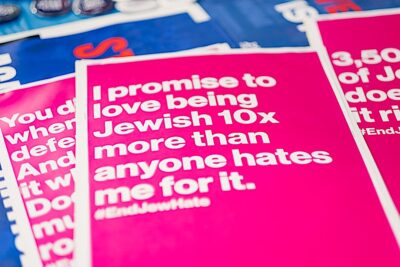 photo: Levi Meir Clancy/Unsplash
Approach #2: Resilience and Grit Judaism
In response to the Nazi yellow star, German–Jewish World War I veteran Robert Weltsch published an inspiring message to his brethren, entitled “Wear It With Pride.” He wrote:
“April 1, 1933, could be the day of Jewish awakening and rebirth if the Jews desire it, if they show maturity and greatness within them, and if they are not as misrepresented by their opponents. Under attack, the Jews must acknowledge themselves. It is not true that the Jews betrayed Germany. If they betrayed anyone, it was themselves, the Jews. Because the Jew did not display his Judaism with pride, because he tried to avoid the Jewish issue, he must bear part of the blame for the degradation of the Jews.”
Since October 7th, a choice has been forced upon us by Hamas and the global community, just as Germany challenged the Jews 100 years ago. There is again a unique opportunity to rekindle the Jewish spirit, to rediscover our self-worth that transcends the scars of the past and embraces a proud heritage.
The choice is not easy, but it is simple: to embrace ourselves, our history, peoplehood, and mission, or to deny.
This gritty approach is expressed humorously in the old Jewish joke about two elderly Jews riding a train in 1930s Germany. One of them is reading a Jewish paper while the other is eagerly turning the pages of Der Sturmer, Streicher’s violently antisemitic Nazi rag:
“How can you read that filth?” the first Jew asks. “Simple,” his friend replies. “In your paper, Jews are being beaten, robbed, and deported. But in the Nazi paper, it’s all good news. I just found out that the Jews control the entire world!”
The deepest victory over Hitler and antisemitism comes when the Jews stop defining themselves by this hatred and instead embrace their identity. Our real education begins not when we escape antisemitism, but when we confront it.
Antisemitism, seen from this perspective, actually acknowledges Jewish impact and exposes the failings of the antisemites themselves. Embracing our Jewish identity starts with understanding why we have been targets of hate, but it flourishes only with a deep understanding of who we truly are.
Learning this secret unlocks our potential — not just as a people, but as individuals. The real power of the Jewish people is not about controlling governments or manipulating economies, as our detractors falsely claim. It is about each of us striving to become the best version of ourselves. As the Torah says, we are a “stiff-necked people.” This can mean we are slow to learn our lessons, but it also signifies a positive trait: conviction, resilience, and clarity of purpose.
We can either be paralyzed by resurging Jew-hatred, or we can understand that it’s provoked by the good we represent. With this understanding, we can stand tall with pride, moral clarity, and conviction.
To be Jewish is to be a messenger, carrying mystical knowledge across generations. Even when we forget the message, we are hunted for that knowledge. Leaving behind the message doesn’t mean antisemitism leaves us. Jewish history has two sides:
- On one side, Jewish greatness shines through even in the darkest of times.
- On the other, antisemitic hatred casts a shadow.
When Jews look into the eyes of their haters, they may feel weak, but antisemites are really acknowledging Jewish greatness.
Jews with grit and resilience understand antisemitism is not caused by them; it is the result of the antisemite’s weakness. They see antisemitism as a confirmation of Jewish strength, not a condemnation. For these Jews, antisemitism is a measure of Jewish success. It is a reminder of our incredible journey through time and history, across lands, empires, and ideas.
🚨 BREAKING: Israel HUNTS DOWN Houthi Leader [32:07]
May 16, 2025 Tousi TV
Jonathan Pollard: Houthi Missiles-Combating Religious Zombies [9:19]
May 16,2025 Machon Shilo – An audio message from Jewish hero Jonathan Pollard
May 14: Trump’s Welcome Embrace of “Jihad” PARK MACDOUGALD
Boeing makes out like bandits in Doha; China courts the Gulf; Wang buys $TRUMP
MAY 14, 2025
The Big Story
Here’s some moderately good news: President Donald Trump met with Syrian leader Ahmad al-Sheraa in Riyadh, Saudi Arabia, on Wednesday, prior to leaving for his state visit to Qatar. According to a readout from the White House, confirmed by Press Secretary Karoline Leavitt on X, Trump “urged” Sheraa to sign on to the Abraham Accords with Israel, expel foreign terrorists from Syria, deport Palestinian terrorists, cooperate with the United States on fighting ISIS, and “assume responsibility for ISIS detention centers in northeast Syria.”
Yes, Sheraa may have had a $10 million U.S. bounty on his head until December, but Trump appeared charmed by the man, commenting that Sheraa was “tough” and “handsome.” And in his Tuesday speech in Riyadh, the president made clear exactly who his Syria moves were supposed to be a favor for. “Oh, what I do for the crown prince!,” Trump said after announcing his intention to lift all U.S. sanctions on Syria. The crown prince, of course, being Saudi Arabia’s Mohammed bin Salman.
So, why is that a good thing? Sheraa is a former jihadist after all, and we’ve seen plenty of outraged commentary in pro-Israel circles connecting Trump’s Syria policy to his acceptance earlier this week of a $400 million jet from Qatar, or to the presence of pro-Qatari elements in his inner circle. Others have framed the move as a disappointing sop to the Turkish menace, given that Sheraa is heavily backed by Turkey. But we think that’s too pessimistic by far, for two main reasons.
The first is that it’s simply good policy. Yes, the Qataris wanted the move, but so did every other one of Washington’s major Sunni allies, with multiple analysts we spoke to pointing to the significance of the announcement being made in Riyadh, not in Doha. “It’s one of the first moves that he’s done that’s in keeping with his first-term foreign policy,” Tablet News Editor Tony Badran told The Scroll. “Already in December, while everyone was freaking out, Trump was like, Yeah, man. Turkey’s our ally, and they took over Syria, and that’s smart. There was no outrage, or mention of jihad or minorities; that stuff’s just not in his vocabulary. Which actually makes him super ‘realist,’ because he’s dealing with nation-states. He folded Syria into his Turkey and Saudi policy, which is exactly what you’re supposed to do.”
Trump also saved the Israelis from their ill-conceived plans to “ally” with Syria’s minorities—which, as Middle East analyst Phillip Smyth told The Scroll, “never actually work out.” As Badran put it, “Trump told the Israelis, We’re going to figure out some sort of modus vivendi between you and the Turks. It’s a perfect Trump move because it drives everybody crazy.” Smyth added, “I just don’t see how this is a net loss for the United States. The Chinese have been reaching out [to Syria] hardcore, despite the fact that they were kissing [former Syrian dictator Bashar al-]Assad’s ass for ages. This opens the door for us to block them out—and to block out the Iranians.”
Second, as we noted yesterday, the embrace of Sheraa is a decisive rebuke of the Tucker Carlson-Tulsi Gabbard info op that we’ve been chronicling since December, which has painted Sheraa as an al-Qaeda asset of Barack Obama’s “neocon” CIA and flooded conservative media with fake stories about the “jihadists” massacring Christians in Syria. For instance, here was Gabbard in her confirmation hearing in January:
I have no love for Assad or Gaddafi or any dictator. I just hate al-Qaeda. I hate that we have leaders who cozy up to Islamist extremists, minimizing them to so-called rebels. As Jake Sullivan said to Hillary Clinton, “Al-Qaeda is on our side in Syria.” Well, Syria is now controlled by an al-Qaeda offshoot, HTS [Hayat Tahrir al-Sham], led by an Islamist jihadist [Sheraa] who danced in the streets on 9/11 and who is responsible for the killing of many American service members.
Gabbard went on to explain that Sheraa had been trained by “the CIA’s Timber Sycamore program” to help “overthrow” the Assad regime and start “yet another regime change war in the Middle East.” He had also—why not?—“already begun to persecute and kill and arrest religious minorities like Christians in Syria.”
All of that was, of course, fake, and part of a messaging campaign to (a) target pro-Israeli American evangelicals and (b) box the Trump administration into a structurally pro-Iran policy in the Levant. Trump has now confirmed what we wrote at the time, which is that the Gabbard-Carlson line about the “neocons” and “jihadists” in Syria has nothing to do with Trump’s policy. Which suggests that some of that faction’s other messaging—about Iran, Israel, Russia, etc.—might be on similarly shaky ground.
—Park MacDougald
The Rest
→During Trump’s Wednesday visit to Doha, the White House announced that it had secured $243 billion worth of “deals” with Qatar, including a $96 billion deal for the emirate to buy more than 200 commercial jets from Boeing. That’s less than the $600 billion promised by the Saudis yesterday, but Bloomberg reports, citing White House messaging, that today’s announcements were “laying the groundwork for a bigger $1.2 trillion economic pledge” with Doha; however, given that the latter figure represents more than five times Qatar’s annual GDP, we’re a bit skeptical. But given the recent tendency of Boeing planes to come off the assembly line over-budget and behind schedule—and at times to fall apart in midair or crash themselves—maybe the way to read today’s announcement is that Trump has convinced the Qataris to buy our lemons.
→Or maybe it’s about competition with China? Writing in Defense One, Tye Graham and Pete Singer note that Trump’s Gulf diplomacy comes amid a wave of major Chinese investment projects in the Gulf Arab states, including these in just the past few months:
Graham and Singer write that the Persian Gulf, which began strengthening ties with Beijing as a hedge against the pro-Iranian tilt of U.S. policy under President Joe Biden, is “quickly turning into China’s favorite testbed for the next-generation of digital infrastructure.” That’s led to a situation in which, in many Gulf states, Chinese-made 5G digital infrastructure exists side by side, literally, with U.S. military installations, raising concerns about electronic spying. In Bahrain, for instance, Chinese 5G provider Huawei operates the mobile telecommunications infrastructure used by the U.S. Navy’s Fifth Fleet.
[Ed.:

Genocide in Syria: Jihadists Massacre Druze, Christians, ‘Infidels’ by Uzay Bulut
May 14, 2025 at 5:00 am
Translations of this item:
- Ever since the terrorist group Hayat Tahrir al-Sham (HTS) conquered the Syrian capital Damascus with Turkey’s help in December of 2024, HTS fighters and their affiliated militias — often offshoots of ISIS and al-Qaeda — have been massacring religious minorities throughout the country. The internet has been flooded with images… of Alawite men, women and children being barbarically shot at close range.
- Most recently, after slaughtering Alawites, HTS and Syria’s new Islamic regime, under the self-proclaimed “presidency” of former jihadist commander Ahmed al-Sharaa, are massacring other religious minorities in the country, including Christians and Druze.
- HTS is still designated as a terrorist organization by the UN, EU, US and UK.
- Qatar and Turkey are apparently the powers behind the new regime in Damascus.
- Sunnis in Inkhil, Daraa, were filmed running buses for those who want to go after the Druze. HTS supporters in Idlib waved ISIS flags and incited against the Druze and Jews.
- Endless footage from Syria signals that HTS and its supporters have a genocidal intent towards all religious minorities in the region.
- “The targeted areas were the places of Alawites and Christians. Many innocent Christian victims were also killed. Residents of some of those places were forced to leave their homes. Then they were shot and killed. Then their houses, property, and cars were stolen.” — John X, Patriarch of the Greek Orthodox Church of Antioch, March 9, 2025.
- The fate of these communities should not be left to al-Qaeda and ISIS terrorists in Syria. Moreover, Syria should not be left to the savagery of al-Sharaa and his HTS offshoots of ISIS and al-Qaeda, or to Turkey’s terrorist mastermind, Erdogan.
- For years, Erdogan has repeatedly vowed to “liberate Jerusalem,” as he seems to be attempting to rebuild the Ottoman Empire and install himself as Sultan. Now, with HTS and his other proxy militias in Syria, Erdogan finally has the unimpeded path he has been waiting for to do it.
Ever since the terrorist group Hayat Tahrir al-Sham (HTS) conquered the Syrian capital Damascus with Turkey’s help in December of 2024, HTS fighters and their affiliated militias — often offshoots of ISIS and al-Qaeda — have been massacring religious minorities throughout the country. The internet has been flooded with images — some discredited as old or manipulated, but many not — of Alawite men, women and children being barbarically shot at close range.
Most recently, after slaughtering Alawites, HTS and Syria’s new Islamic regime, under the self-proclaimed “presidency” of former jihadist commander Ahmed al-Sharaa, are massacring other religious minorities in the country, including Christians and Druze.
HTS is still designated as a terrorist organization by the UN, EU, US and UK.
The ongoing massacres against religious minorities in Syria should not surprise anyone given that the country is currently ruled by al-Sharaa, a former member of al-Qaeda and the al-Nusra Front. He joined offshoots of al-Qaeda in 2003, fought for the terror group in Iraq for several years, and was imprisoned by the Americans between 2006 and 2011.
As journalist Adi Nirman notes:
“Al-Sharaa, who until recently was known by his alias ‘al-Julani,’ is a longtime jihadist who was part of the ranks of organizations associated with al-Qaida and ISIS, and even orchestrated an attack against Israel – milestones that led to his designation as a ‘Specially Designated Global Terrorist’ by the US, with a reward of approximately $10 million for information leading to his capture.”
In 2011, Abu Bakr al-Baghdadi — then the leader of the Islamic State in Iraq (ISI), previously known as al-Qaeda in Iraq — sent al-Sharaa to spearhead his group’s entry into Syria.
The U.S. State Department designated al-Sharaa as a terrorist in 2013. Its “Rewards for Justice” program offered $10 million for information leading to him, and noted that “he remains the leader of [the al-Qaeda-affiliated Jabhat al-Nusra], which is at the core of HTS.”
President Joe Biden rescinded that bounty in December 2024, presumably in the hope that al-Sharaa would turn out to be another Konrad Adenauer, who healed Germany after the Second World War.
The UN Security Council nevertheless designates HTS as a terrorist group due to its links with al-Qaeda and ISIS. The designation has been transposed to EU law and — theoretically — is to be followed by all 27 EU member states.
Qatar and Turkey are apparently the powers behind the new regime in Damascus. Turkey’s involvement in the rise of HTS appears to be extensive. Both Turkey and HTS both been have been occupying and exploiting parts of northwest Syria since at least 2017. Turkey’s President Recep Tayyip Erdogan evidently provided arms and assistance to the HTS during its December advance to Damascus and allowed the terror group to run a key border crossing in northwest Syria.
Since HTS took over Syria, jihadists have committed massacres against the members of the Alawite minority, and the persecution of Syrian Christians has skyrocketed.
Starting in April, rampant violence has been committed against the Druze by Syria’s new government. Al-Sharaa seems to be hoping that dapper Western tailoring will fool the West into assuming that his thoughts align with his wardrobe. The Sunni Muslims of HTS have caused the deaths of countless Druze civilians. Videos posted on social media show HTS forces executing Druze civilians in the town of Sahnaya. Other HTS footage shows Druze civilians abducted and humiliated.
The Druze are just one of the many religious and ethnic groups in the Middle East. Separated by national borders drawn after the breakup of the Ottoman Empire in the early 1923, more than a million now live scattered among Israel, Syria, Lebanon and Jordan.
A leader of Syria’s Druze minority, Sheikh Hikmat al-Hijri, has condemned the jihadist violence in Jaramana and Sahnaya, towns near Damascus, as a “genocidal campaign” against Syrian Druze. Hijri urged immediate intervention by “international forces to maintain peace and prevent the continuation of these crimes”.
Syria’s new regime announced that to ensure security, it would deploy forces in Sahnaya, and accused “outlaw groups” of instigating the clashes.
Hijri said he no longer trusts “an entity pretending to be a government… because the government does not kill its people through its extremist militias… and then claim they were unruly elements after the massacres”. “The government [should] protect its people,” he added.
The attacks against the Druze came after a “deepfake” video was circulated on social media that showed a Syrian Druze Sheikh, Marwan Kiwan, appearing to denounce Islam’s prophet Mohammed, angering Muslims. According to a report in the Abu-Dhabi-based news website The National:
“Druze spiritual leaders and Muslims across the country warned that the video was an attempt to ignite sectarian strife. The Syrian Interior Ministry said on Tuesday that the voice in the video was not Sheikh Kiwan’s and that it was working to determine who altered the video and would mete out ‘strict punishment’.
“Ahmad Al Zuaiter, a prominent resident of Jaramana, said militants from nearby areas of Ghouta fired mortar rounds into the district overnight and tried to enter through a checkpoint known as Al Nassem that is manned by Druze members of the newly established police.
“The dead included six Druze, mostly members of the police force, while the rest were attackers, Mr Al Zuaiter said.
“Sheikh Hikmat Al Hijri, the spiritual leader of Syria’s Druze, said the attack was carried out by ‘takfiri, terrorist gangs’, meaning militants who justify the killings of members of other sects because they are non-Muslims.”
The fake video, and the historic Islamic animosity towards the Druze and other non-Muslims, appear to be the driving motives of the ongoing violence against religious minorities in Syria. There are no reliable figures for the exact number of casualties, but sources on the ground said hundreds of Druze are estimated to have been executed by Islamists.
A Syrian Christian, on condition of anonymity, told Gatestone:
“The city of Suwayda is where the largest number of Druze reside.
“In the city of Jaramana, the Druze live in large numbers. Sahnaya and Ashrafiyet Sahnaya are small cities, where the Druze live and HTS terrorists attacked those cities recently. The Druze lost control of those two cities to the HTS. They are being subject to massacres and ethnic cleansing right now.
“Suwayda is under attack. The Druze issued general mobilization there and are in self-defense. The Druze outside the city of Suwayda are essentially besieged.
“There is a major media blackout in those towns right now, and the Druze at the moment are mainly focused on defense.”
According to the Israeli news website Ynet:
“Jaramana, a mixed Druze-Christian city near Damascus, is in a vulnerable position. Unlike the Druze stronghold of Suwayda in southern Syria—where the community is more independent and armed—the Druze of Jaramana lack the ability to defend themselves. Israel has closely monitored the situation, concerned that Syria’s new leadership could test the Druze population’s standing, making it a red line for Jerusalem.”
Meanwhile, radical Sunni Muslims have taken to the streets in Syria, calling for jihadist violence against the Druze and other religious minorities. Sunnis in the city of Homs marched against the Druze and Jews, declaring jihad against both communities. They shouted slogans such as:
“Khaybar Khaybar, O Jew – the army of Mohammed has returned (in reference to Islam’s prophet Mohammed’s massacre against Jews in Khaybar, Arabia in 629.)
“Listen, listen O Druze!”
“Listen, O enemy of Islam: war and fire – no peace!”
“At your service, O messenger of Allah!”
In another video, protestors in the city of Hama are heard screaming:
“This is Sunni Hama! We want to exterminate the Druze! In the path of Allah, we march! We seek to raise the banner high! So that the religion may regain its glory or our blood will be spilled.”
Sunni jihadists also took to Hama’s central al-Assi square and chanted slogans, including:
“Khaybar, Khaybar, O Jews, the army of Muhammad will return”
“There is no God but Allah, & the Druze are the enemies of Allah, & the kafir (infidel) is the enemy of Allah”
“Allahu akbar!”
Sunni students at Homs University have been filmed shouting slogans inciting violence against the Druze: “For the attention of [HTS] General Security: Any Druze we see in the dorms, we’re slaughtering! Inform those who are absent!”
The students also announced that they will “pour fire and bullets” on anyone who defends the Druze or “defends Sultan al-Atrash” (leader of the 1925 Great Syrian Revolt). Incitement by Sunni students against minorities at other Syrian universities has also led to Druze students being evacuated.
On April 30, in Damascus, mosques in Eastern Ghouta were heard calling for mass Sunni mobilization:
“To all young men carrying weapons: proceed and gather at the municipal building. General mobilization! All armed young men must head to the municipal building immediately.”
Sunnis in Inkhil, Daraa, were filmed running buses for those who want to go after the Druze. HTS supporters in Idlib waved ISIS flags and incited against the Druze and Jews.
Endless footage from Syria signals that HTS and its supporters have a genocidal intent towards all religious minorities in the region.
In another video, sword-wielding HTS terrorists threaten to wage jihad against the Druze. One of them is heard saying, in part:
“We say to you, O enemy of Allah, O accursed Druze, you have nothing from us, but the severing sword…. Allahu akbar!”
On May 2 and 3, Israel reportedly launched its heaviest airstrikes so far this year on Syria. It included bombing a building near the presidential palace in Damascus. The Israel Defense Forces Arabic-language spokesman, Avichay Adraee, said “warplanes attacked… the area near Ahmed Hussein al-Sharaa’s palace in Damascus.”
In a joint statement, Israeli Prime Minister Benjamin Netanyahu and Defense Minister Israel Katz called it a “clear message” to Syria’s new rulers.
“We will not allow forces to be sent south of Damascus or any threat to the Druze community,” they said. The Israel’s military later added that its forces deployed in southern Syria were ready to protect the Druze minority.
Hours later, Israel carried out more than 20 strikes on military targets across Syria, according to the Syrian Observatory for Human Rights.
Syrian reports also indicate that the Israeli military facilitated the delivery of humanitarian aid to the Druze village of Khadr in Syria’s Quneitra province. The aid, organized by Israel’s Druze religious council, was designated for villages near the Israeli border, with additional shipments planned for other areas.
At the same time, threats against Syrian Christians keep escalating. In the “Valley of the Christians,” armed jihadists and Sunni students from Hwash University, chanting jihadist slogans and holding public prayers in a show of force, stormed the Christian village of al-Mzayneh.
Nikolas Farantouris, a Member of European Parliament from Greece, visited Syria on March 8-9, and spoke with the representatives of the Syrian Christian community, including Syria’s Greek Orthodox Patriarch John X. In a letter Farantouris submitted to the president of the European Parliament, he wrote, “Reliable data indicate 7,000 massacres of Christians and Alawites and unprecedented atrocities against civilians.”
Patriarch John X said during a sermon on March 9:
“The bloody events taking place on the Syrian coast left many dead and wounded…. In many cities, towns, and villages, their houses were burnt, and their properties have been stolen. The targeted areas were the places of Alawites and Christians. Many innocent Christian victims were also killed. Residents of some of those places were forced to leave their homes. Then they were shot and killed. Then their houses, property, and cars were stolen.”
The mass killings of hundreds of civilians from the Alawite minority in the western coastal region last month and the ongoing massacres against the Druze community have also heightened fears among other minority communities — including the Christians, Yazidis and Kurds — and sparked calls for international protection.
The fate of these communities should not be left to al-Qaeda and ISIS terrorists in Syria. Moreover, Syria should not be left to the savagery of al-Sharaa and his HTS offshoots of ISIS and al-Qaeda, or to Turkey’s terrorist mastermind, Erdogan.
For years, Erdogan has repeatedly vowed to “liberate Jerusalem,” as he seems to be attempting to rebuild the Ottoman Empire and install himself as Sultan. Now, with HTS and his other proxy militias in Syria, Erdogan finally has the unimpeded path he has been waiting for to do it.
Uzay Bulut, is a Turkish journalist, is a Distinguished Senior Fellow at Gatestone Institute.
[Ed.: Here is a photo of our President shaking the hand of this terrorist in a suit. I guess he’s “keeping his enemies closer... Maybe FAFO is going to make him a ‘deal’ that he can’t refuse?
Donald Trump on Jolani: “Young, attractive guy, tough guy. Strong past, very strong past — fighter. He’s got a real shot at holding it together.”
My Palestinian best friend made me a proud Zionist. LIZA LIBES
The Israeli-Palestinian conflict came between us — but it was never the whole story.
MAY 13, 2025
The summer before the third grade, nibbling on a piece of challah at my Jewish summer camp, I learned about the mystical Land of Israel.
Growing up in a secular family of Jewish refugees — where Judaism was not mentioned unless someone really asked — I did not know much about my people or their historical fate. As a kid, I simply knew that we did not celebrate the holiday with the fat red man or the one with the cute bunny, and we ate bad-tasting bread for a week every spring after setting up a plate with horseradish, lettuce, and a bone (for some reason).
And unlike some of my peers who had grown up with Jewish pride, I certainly did not think of my background as anything to be proud of. Instead, I did everything I could to forget that I was Jewish. I convinced my parents to buy me Christmas presents so that I would have something to talk about with the other kids when I went back to school after the holidays, and I was adamant about staying away from Hebrew School, which just seemed like another chore reserved for the other weird kids.
Yet, the summer I was sent to Jewish summer camp, I was thrust into a world where things were done completely differently. Every morning, we would sing a song in Hebrew, whose words I pronounced but did not understand, and every Friday right before sunset, we would gather in a large white tent and drink grape juice and eat challah. I did not know what we were celebrating, but as a fan of grape juice and challah, my 7-year-old self thought that this was Judaism at its finest.
One evening, we received an unexpected guest: a girl in a green uniform who taught me about something I’d never heard before. She had flown in from a relatively new country many miles away called Israel, where all young girls just like her had to serve in the army, and she was here to tell us about what it was like to be in the IDF.
My only thought back then was that of horror; what sort of a country in the 21st century sent women off to battle?
My understanding, of course, of the IDF back then was very limited, yet that disdain for Israel must have stayed with me for several years after; whenever it was brought up, I always thought of it as a backwards country with backwards values that did not keep up with modern life in America. Israel was a distant land for those other weird kids, and its fate did not concern me.
By the ninth grade, I had successfully distanced myself so far from my Jewish identity that, if you asked me anything about my religion or my background, Judaism was never mentioned. Instead, I played up the Russian side of my heritage, recounting stories about how my parents had emigrated from the Soviet Union in the 1990s and how I had grown up on old Soviet cartoons.
As a third culture kid, I naturally gravitated towards other first-generation Americans and soon befriended a Ukrainian girl and a Taiwanese boy at my high school. I was somewhat happy with my limited yet close set of friends until, one day, a girl in a shawl around her head approached me in the hallway to tell me that she heard that my parents were also immigrants and that she thought we might be friends.
Having attended a small, predominantly white school for my entire life, that was perhaps the first time I had ever interacted with — or maybe even seen — a Muslim. I didn’t know what to make of her green scarf, but I had been taught the value of inclusivity for my entire life, and the girl seemed very nice. Bonding over our families’ immigration stories, respect for tradition, and shared values, we quickly became friends.
One day she told me that her parents had come from a country called “Palestine.”
I had never heard of the country before — but at 14 years old, I had probably not heard of my many countries. Based on her description, it seemed like another country in the Middle East, like Syria or Jordan or Iraq, and I was fascinated to learn about her Arab background.
I listened to her stories about holidays like Eid and Ramadan, and picked up a few words in Arabic. By the following year, we were inseparable, participating in the standard set of teenage girl activities together: exchanging homework, meeting up for brunch, hanging out at the mall, and going to the gym — until I soon considered her my best friend.
Not once did it cross my mind that anything could possibly be amiss.
One afternoon after school, we drove home with my grandparents, who started a conversation with my friend in their broken English. I quickly jumped in to translate their questions from Russian into English: “How old are you?” “What’s your favorite subject in school?” “What do you want to be when you grow up?”
Then: “Where are you from?”
“Palestine,” she answered.
For a moment, I wracked my brain to remember the name of the country in Russian, for I had never heard it mentioned before in our language, but I quickly caught on that my grandparents understood, I did not have to translate.
The conversation had ended.
When we dropped my friend off at her destination, my grandmother turned to me with reproachful brown eyes and asked, “She’s Palestinian?” I did not know what was meant by the question. I did not know a thing about “Palestine” other than the fact that it was a country, as my friend had said, in the Middle East. I nodded and frowned, asking my grandmother for clarification.
I will remember her answer, spoken in that shaking, almost desperate voice, for the rest of my life: “But you are a Jew.” I did not know what she meant.
Trump, Qatar & the Freed Hostage – What Is Really Going On?! [14:04] Avi Abelow
May 13, 2025 – So much to unpack—stick with me as we break it all down. Idan Alexander is free—Baruch Hashem—but now we’re seeing deeply troubling signals from President Trump that has many people worried that he is empowering our enemies, and no longer supportive of Israel doing what needs to be done for a victory over our Islamonazi enemies.
Things JUST Went Horribly Bad Between Trump & Netanyahu [13:50] Yishai Fleisher
May 13, 2025
9,269 views • May 13, 2025
Is Israel going to stand up and lead?
BREAKING: Hamas Leader In Gaza ELIMINATED By Israel [LIVE]
May 13, 2025 Tousi TV
[Ed.: WE GOT HIM!]
Have You Lost Friends Over 2024? You’re Not Alone, Especially On The Left BEN DOMENECH
The loss of friends is driven by one demographic, and you can guess which one
MAY 13, 2025
You may already have experienced it yourself. Whether you reacted with surprise or just wrote it off with dawning disappointment or a wry acknowledgement of inevitability depends on how well you know people. But new polling data shows what you may already suspect: your experience of losing friends since the 2024 election of Donald Trump is absolutely real — if very divided depending on your political tribe.
When national pollster Cygnal offered this writer the opportunity to suggest a question or two for their latest national survey, it was an opportunity to put to the test the experience of many Americans I know: in the past six months, they’ve lost at least one friend over the result of the 2024 election. The direction of lost friends seemed very politically consistent in my experience, but anecdotes aren’t data, and knowing more people on the right than the left, it’s possible this personal experience was skewed.
It turns out that it isn’t. According to Cygnal’s latest national survey of 1,500 likely voters (conducted May 6-8, with a 3 percent MOE), more than half of voters (53%) say “it’s at least somewhat common that their friends and neighbors have ended a friendship because of Donald Trump and the 2024 election” while “39% say not that common or not at all common.”
The ideological breakdown isn’t close. Democrats and voters who backed Kamala Harris in 2024 are far more likely to say friends and neighbors have ended a friendship over the election, with self-identified liberals saying they have a hard time co-existing and playing nice with someone who voted differently than they did by thirty points, a 2:1 margin (61% common compared to 31% not common). On the other side, conservatives are much more even-keeled — 49% say lost friendships over 2024 are common, but 45% saying it’s not common.
If you wanted to drill down to the biggest dividing factor here, it’s the portion of the coalition made up of college educated women — a cohort that now dominates the politics of the Democratic coalition. In their circles, they say differences of political opinion have led to broken friendships with friends and neighbors at a more than forty point rate, 67 percent to 24 percent.
One factor here could be an underlying belief that your friends and neighbors are just flat out racists over their political opinions. Of Kamala Harris voters, Cygnal’s poll found that 62 percent say race relations have gotten worse in the past five years (since the summer of George Floyd), while 55% of Trump voters say race relations have improved or stayed the same. And again, the same cohort shows up to double-down on that belief: fully 75% of white female Democrats with a college-degree say race relations have gotten worse since 2020, compared to just 41% of black men.
It’s the allyship that matters most, you see — not friendship.
The full poll will be released later today. You can follow pollster John Rogers here.
[Ed.:

Iran’s Apocalyptic Vision Transcends Diplomacy & Finance Ambassador (ret.) Yoram Ettinger, “Second Thought: a US-Israel Initiative”
May 13, 2025
*47 years of US negotiation with the Ayatollah regime suggest that US policy makers have been impressed with the, supposedly, pragmatism of Iranian negotiators. However, while the US considers agreements with the Ayatollah regime and its proxies (e.g., the Houthis, Hamas, Hezbollah) a step toward reconciliation and peaceful coexistence, the Ayatollah regime considers negotiation as a step toward the realization of its ideology – a global domination of all walks of life by Shia Islam, headed by Shia clerics.
*While US policy makers tend to take history, ideology and religion lightly, assuming that Money Talks, the Ayatollah regime is determined that Ideology Walks. Furthermore, as documented by its 47-year-old track record of rogue exportation of the Islamic Shia Revolution, the Ayatollah regime’s ideology transcends financial and diplomatic accords and benefits.
*The ideology-driven rogue conduct of the Ayatollah regime has been vindicated by the surge of Iran from a secondary/tertiary power in 1979 to a global power in 2025, with strategic footprint from the Persian Gulf to Latin America and the US homeland.
*Iran’s Ayatollah regime has been fully inspired by the Islamic Shia ideology, which was expounded by the leader of the 1979 Islamic Shia Revolution, and the founder of the Islamic Republic, Ayatollah Ruhollah Khomeini. Khomeini is considered by the Ayatollah regime and Shia Muslims as The Sublime leader and the role model of governance in accordance with the Twelver Shia, which is embraced by a vast majority of Shia Muslims (e.g., a 60% majority in Iraq, 35% minority in Lebanon and a 12% minority in Saudi Arabia, mostly in the oil region). The Twelver Shia holds that the “infallible” 12th Imam (Muhammad al-Mahdi), who disappeared in 939 AD, will return in a violent apocalyptic context, severe suffering by Shia Muslims, stained in “infidel’s” blood, as a savior to establish global justice, dominated by Shia Islam, which is, ostensibly, divinely ordained as the sole legitimate religion.
*Khomeini’s aggressive legacy includes the Twelver concept of the Guardianship of the Islamic Jurists (Velayat-e Faqih), which stipulates that all aspects of life must be governed by Shia clerics until the reappearance of the Mahdi. The Khomeini legacy also dictates that the attempts to bring the “infidel” West to submission provide a tailwind to the reappearance of the Hidden Imam al-Mahdi. Also, Khomeini was influenced by the founder and the leading ideologue of the Muslim Brotherhood, Hassan al-Banna and Sayyid Qutb, in addition to the annually commemorated 680 AD Battle of Karbala (the origin of the Sunni-Shia rift and Shia vengeance and martyrdom), the Twelfth Imam, and the 1501 AD recognition of Shia Islam as the official religion of Iran. While martyrdom has always been celebrated by Islam, with martyrs promised a place in heaven (Quran 3: 169-171 – “Never think of those martyred in the cause of Allah as dead; they are alive with their Lord, well provided for….), the Khomeini legacy has promoted deliberate-martyrdom (Istishhad), heralding “the great martyr Imam Husayn ibn Ali,” who was killed in Karbala.
*Iran’s current Supreme Leader, Ayatollah Khamenei has fully integrated the Mahdist ideology into Iran’s domestic and external conduct. The Islamic Revolutionary Guard Corps, which coordinates Iran’s cooperation with its terror proxies throughout the globe, incorporates Mahdist ideology into its training programs, preparing the ground for the Mahdi’s return, and confronting The Great American Satan and its Middle East Vanguard, Israel.
*Thus, while the Ayatollah regime has underscored skilful negotiation and peaceful talk, its anti-US walk – domestically and internationally – has been driven by a 1,400-year-old apocalyptic ideology, which has been embedded in Iran’s 1979 Constitution, school curriculum, mosque sermons and official media, transforming Iran into the chief global epicenter of wars, terrorism, drug trafficking, money laundering and the proliferation of advanced weaponry.
The bottom line
Underestimating the intensity of the apocalyptic zeal of the Ayatollah regime, and sacrificing the volcanic, bleeding and frustrating ideology-driven Ayatollah apocalyptic reality on the altar of a pragmatic, peaceful and convenient business-driven alternate reality, may yield a short term geo-strategic accommodation, but would trigger a long term wave of wars and terrorism, paving the road to the first ever apocalyptic nuclear power.
Where Are The Epstein Tapes? [5:12] JEROME R. CORSI, PH.D.
Jesse Watters Asks For a Friend
MAY 12, 2025
AG Pam Bondi has said she has more information concerning Jeffrey Epstein, his associates, clients and child sex trafficking. While we wait for the DOJ to move forward, Dr. Jerome Corsi takes a deeper look into Epstein, delving into whether he was an intelligence asset and how many Democrats who met with the alleged sex trafficker somehow wound up with promotions within the Obama administration, some given powerful positions within the later Biden administration.
This is the moment for Israel to remember what it means to be sovereign. JOSHUA HOFFMAN
While Israeli analysts debate whether there’s a rift with the United States, the real story is more complex. There’s no rupture, but there is recalibration.
MAY 12, 2025
In a Middle East flush with oil and old grudges, the real currency today is not dollars or drones.
It’s hostages.
On Monday evening, Edan Alexander (an American-Israeli IDF soldier) stepped back into sunlight after 583 days of hell, held captive by Hamas. His return was a miracle. Not a spiritual one, but a political one — courtesy of a backchannel brokered by private mediators, Hamas leadership in Qatar, and the Trump administration’s Middle East envoy, Steve Witkoff.
The operation was slick, untelevised, and strategically timed: Trump will depart on Monday for Saudi Arabia, before making stops in Qatar and the United Arab Emirates. He is not slated to visit Israel on this trip.
And while many in Israel rejoiced, others — mothers, fathers, siblings of Israeli hostages without U.S. passports — watched with bitter silence.
Because here’s the quiet truth, and it’s a spicy one: In today’s war for the soul of the Jewish state, a foreign passport is worth more than a soldier’s oath. Israelis are waking up to a brutal calculus that, if your son is taken captive and doesn’t hold an American passport, expect radio silence. If he’s Israeli only, he becomes a line item in a negotiation binder, not a priority.
This has shattered something deep. On the eve of Israeli Independence Day, a Reichman University poll revealed that just 17 percent of Israelis believe the state would do everything to rescue them if they were taken hostage. The Israeli flag — once a symbol of unwavering mutual commitment — has, for many, started to look like a tattered promise. As one anguished mother put it: “My Nimrod is 100-percent Israeli. Nimrod also deserves to come home.”
Trump’s reentry into the Middle East is guided not by loyalty or long-term vision, but by a dopamine-fueled obsession with “wins.”
The release of Edan Alexander? That’s a win. A ceasefire in Gaza? Potential win. Peace with Saudi Arabia? A golden trophy, especially if it comes with Qatari jets and Saudi contracts. A Palestinian state? If he can spin it as outsmarting predecessor Joe Biden, even that’s on the table.
Let’s be honest: Trump doesn’t have a foreign policy; he has a victory policy. His advisors are a tug-of-war between isolationist dealmakers and muscular hawks. One moment it’s “maximum pressure” on Iran, the next it’s “maximum selfies” with Saudi royals. In the morning he threatens Hamas with annihilation; by dinner, he’s negotiating terms.
None of this is coherent, but all of it is aimed at crafting the aesthetic of dominance. If the prize is a smiling hostage and a press conference about jobs in Ohio, the long-term risk to Israel’s security is someone else’s problem.
And what of Israeli Prime Minister Benjamin Netanyahu? He’s walking a political tightrope over a pit of his own making. On one side: the hostage families, disillusioned soldiers, and a nation emotionally fried after 18 months of trauma. On the other: an American president who could bless him with normalization deals or bulldoze him into a ceasefire.
To hide Israel’s exclusion from the Edan Alexander deal, Netanyahu rushed to announce the release before the Americans could. His office even tried to claim credit, suggesting the rescue was the result of Israel’s “aggressive policy” backed by Trump. But no one serious in the region believes it. This isn’t just a diplomatic snub; it’s a symbol of how little leverage Israel currently holds in Washington.
There’s frustration in the Trump administration with Netanyahu. Steve Witkoff himself reportedly criticized Israel’s prosecution of the war, calling it needlessly prolonged. In private, White House aides describe Israel as dragging its feet, resisting a ceasefire, and being uncooperative on broader plans for Gaza. Trump, ever the opportunist, is exploring his own endgame in the region — and Netanyahu might not be part of it.
The Netanyahu government has become so obsessed with political survival and coalition management that it has lost the initiative. Even when Israeli officials are invited to the Oval Office, like Ron Dermer recently, the real decisions are being made elsewhere.
There’s a growing feeling in both Washington and Jerusalem that Netanyahu is playing for time — time that runs out with every hostage who dies in captivity. In a recent call, a former U.S. official warned: “If Netanyahu continues like this, he’ll wake up to find the White House has moved on — without him.”
Translation: Follow, or be left behind.
While Israeli analysts debate whether there’s a rift with the United States, the real story is more complex. There’s no rupture, but there is recalibration.
There’s talk of a ceasefire deal. There’s talk of Saudi Arabia joining the Abraham Accords 2.0. There’s even talk of Trump unilaterally recognizing a Palestinian state. For someone who once tore up Obama’s nuclear deal and moved the U.S. Embassy to Jerusalem, this might seem like ideological whiplash.
Yet, Trump is not ideological. He’s not even consistent. He just wants to be seen winning. And right now, the world is pressuring him to “solve” Gaza — fast.
But let’s not pretend that legitimizing Hamas or enabling Palestinian statehood in its current form is a “solution.” That’s just resetting the clock on the next pogrom.
Since Israel withdrew from Gaza in 2005, Hamas has turned it into a launchpad for war. Five rounds of major conflict. Tens of thousands of rockets. Thousands of Israeli dead. Hundreds of thousands terrorized. And on October 7th, the fantasy that Hamas could be “contained” finally died.
Any deal that ends this war without ending Hamas is not a peace plan. It’s a countdown to the next massacre.
At the same time, Trump’s MAGA wing includes many figures whose support for Israel is now conditional. If Israel no longer appears to “win,” if it drags America into messy wars or delays American-led deals, the MAGA base can turn with surprising speed.
Let’s be clear: Ending the Gaza war by legitimizing Hamas is not peace. It’s parole for terrorists. Since 2005, Gaza has been a laboratory for what a Jew-free Palestinian state looks like: rockets, murder tunnels, and October 7th. Every war Israel has fought with Hamas ended with Hamas still standing. Why? Because the international community, including Israel’s allies, prized “stability” over victory.
But “stability” is what allowed October 7th to happen.
If Trump ends this war prematurely, under the illusion that Hamas can be placated into peace, he’s not buying time; he’s selling out the future. The next pogrom is not a question of if, but when.
Israelis have learned a hard lesson: No one loves a Jew like another Jew. Not even our closest allies. Edan Alexander came home because of his American passport. The others remain underground in Gaza because of their Israeli ones.
Foreign support is fickle. Today, it’s a backchannel. Tomorrow, it’s a bargaining chip. The day after, it’s a headline about “both sides” and “moral equivalence.”
This is the moment for Israel to remember what it means to be sovereign — not just militarily, but morally. To remember that Jewish safety was never meant to be contingent on the kindness of empires or the whims of politicians.
Edan Alexander is home. But until every hostage is home — because they’re Jewish, not because they’re American — this war is not over. Not for Israel. And not for the Jewish People.
The hard truth is that the international community, America included, will never love the Jews more than it loves convenience. Even our closest friends will eventually choose “stability” over justice, “peace processes” over actual peace, and symbolic wins over moral clarity.
That’s why Jewish sovereignty matters. It’s why the Israeli flag matters. And it’s why every Israeli child, soldier, and hostage must know — without a doubt — that their life is not contingent on a second passport, but on the commitment of their nation.
Omer Shem Tov, an Israeli hostage released from Hamas captivity in March as part of the Gaza ceasefire-hostage deal, recently said that his captors cursed, starved, and spat on him, and once threatened to shoot him if he would not agree to help collapse a booby-trapped building on IDF troops.
“If you don’t do it, we’ll shoot you in the head,” Shem Tov recalled his captors saying. “I told them: Then shoot me in the head. I have no intention of doing it.”
This is the moral spine of the Jewish People: tortured, cornered, but unbroken. We owe it to heroes like Shem Tov, and to every hostage still buried in Gaza’s tunnels, to act with the same clarity and courage they’ve shown in the face of evil.
Because, in the end, no one is coming to save us. We have to save ourselves.
Analysis: U.S.-Saudi Nuclear Decoupling, Israeli Normalization, and the Emergence of Global Totalitarian Superstates Mordechai Sones
‘The Abraham Accords may be a “Trojan Horse” designed to prevent Israeli sovereignty and pave the way for a binational, democratic “State of Israel & Palestine” with equal rights, integrated into the Saudi-dominated Middle East Union’
May 12, 2025 Jewish Home News
According to recent reports, the Trump administration has decided to decouple U.S. support for Saudi Arabia’s civilian nuclear program from the Kingdom’s normalization of ties with Israel.
This policy shift suggests moves aligned with strategic objectives of emerging power blocs in a world consolidating into three dominant, increasingly totalitarian “managerial” blocs (Western/NATO, Chinese, Islamic/Sunni) and the formation of a post-Abraham Accords Middle East Union.
The U.S. decision removes a key condition previously placed on nuclear cooperation, granting Saudi Arabia a significant concession in its pursuit of nuclear energy, including potential enrichment capabilities. Publicly, this is framed within Saudi Arabia’s Vision 2030 goals for economic diversification and future energy needs, and the U.S. rationale includes securing strategic economic and military deals while navigating the political realities following the Gaza conflict that complicate Saudi normalization with Israel.
However, Vision 2030 itself may be a sophisticated exercise in statecraft, employing language of modernization and peace as instruments for power concentration and regime expansion. From this perspective, Saudi Arabia’s drive for nuclear technology, even under the guise of civilian use, is not merely an energy initiative but a strategic play to enhance its capabilities and leverage within the consolidating “Islamic Bloc,” a critical component of the emerging global triad alongside the Western and Chinese blocs.
The push for enrichment capabilities, despite proliferation risks and U.S. non-proliferation standards (like the Section 123 Agreement), can be seen through the lens of the “security dilemma” where the perceived threat from rivals (such as Iran) compels the acquisition of potentially destabilizing capabilities, drawing nations further into a “historical and political vortex.”
For the United States, representing the Western/NATO Bloc in this framework, the decision to decouple normalization from nuclear aid can be interpreted as a move aimed at maintaining dominance within a complex, multipolar world order. A U.S. president during this “advanced stage of the global shift towards totalitarianism” must prioritize maintaining American dominance among emerging “managerial societies,” potentially overriding other considerations, including traditional alliances or sentiments, for strategic necessity. Securing large economic and military deals with Saudi Arabia reinforces economic ties and leverages power, aligning with the “corporate fascism” aspect attributed to the NATO bloc and its reliance on economic influence and covert projection of “hard power.” By facilitating Saudi nuclear ambitions, even with risks, the U.S. may be attempting to manage the capabilities of a key player within the Islamic bloc, ensuring alignment or dependency, rather than allowing uncontrolled pursuit of such technology.
Furthermore, this policy shift gains significant context when viewed alongside the understanding that the Abraham Accords are not merely normalization agreements but precursors to the formation of a Middle East Union. This emerging entity is posited to be dominated by Saudi Arabia, the UAE, and later Egypt, featuring supranational structures, including integrated military and judicial bodies potentially involving Israel and “Palestine.” In this light, the U.S. decoupling of nuclear aid from Israeli normalization could be interpreted as facilitating Saudi Arabia’s consolidation of power and capabilities prior to or during the formation of this Union. By obtaining advanced nuclear assistance from the U.S. before Israel is formally integrated into a structure potentially dominated by Saudi Arabia, Riyadh gains significant leverage and a strengthened position within the nascent Union, supporting the argument that Vision 2030 and related strategic maneuvers aim at “power concentration and regime expansion.”
While Islamic apologists claim the primary religious application for taqiya is protecting oneself and one’s faith under duress, the concept of deception in warfare is inseparable from the context of conquest and jihad. This principle allows for strategic and tactical deception of the enemy during wartime as a legitimate means to achieve victory and minimize casualties. Taqiya may involve strategic silence, ambiguous statements, or the outward appearance of alignment with a dominant political force to advance Islamic interests or long-term goals.
Thus, taqiya is not mere passive concealment due to fear of persecution, but active dissimulation employed strategically against adversaries in a state of conflict, as a tool for outmaneuvering enemies.
The implications for Israel, being at the “epicenter of the conflict” between the blocs and facing a strategy to abolish the traditional “Jewish State,” are particularly stark. Israeli alarm over proliferation and potential sidelining might be missing the deeper strategic objective. The Abraham Accords may be a “Trojan Horse” designed to prevent Israeli sovereignty and pave the way for a binational, democratic “State of Israel & Palestine” with equal rights, integrated into the Saudi-dominated Middle East Union. U.S. decoupling, by empowering Saudi Arabia within the regional architecture, advances the conditions for this Union structure, which would fundamentally alter Israel’s character and sovereignty by requiring external, supranational approval (from the ME Union assembly) for the use of its military forces.
The broader mechanisms described in the article, Trump, the Rise of the Triad, and Israel: The Emergence of Three Totalitarian Global Superstates – strategic deception, manufacturing consent, and unrestricted warfare – are also relevant. The public narratives around Vision 2030’s benevolent goals, the Abraham Accords as purely peace initiatives, and the “civilian” nature of the nuclear program appear to be tools for “manufacturing consent,” designed to mask the underlying strategic maneuvering related to bloc consolidation and the formation of the ME Union.
Events like the October 7th attacks may have been engineered to propel Israelis into a “war hysteria” necessary to commit their army as a “forward shock troop for the global new world order,” clearing territory for Saudi/American interests, representing an extreme example of strategic manipulation, with even devastating conflict being used as a tool of control and geopolitical restructuring.
Russia’s role, as the “wildcard,” lies in its potential to exploit the tensions and shifts created by this dynamic. While not directly involved in the U.S.-Saudi nuclear talks, Russia could seek to leverage the evolving power balance within the Middle East Union’s formation or the strains it places on U.S.-Israel relations to advance its own interests, such as maintaining its Syrian foothold or disrupting Western influence, aligning with its strategy of exploiting divisions and sowing chaos.
The Trump administration decision to decouple Saudi nuclear cooperation from Israeli normalization should not be seen as an isolated policy choice or standard diplomatic negotiation. Instead, it is a move deeply embedded within the struggle for dominance between emerging global managerial superstates and the formation of a Saudi-dominated Middle East Union. The pursuit of nuclear capability, the rhetoric of modernization (Vision 2030), and regional agreements (Abraham Accords) function as instruments of power consolidation, strategic deception, and the restructuring of the region into a new, potentially less sovereign, order for its constituents, including Israel, driven by the interests of the managerial elites controlling these emerging blocs, showing how complex, covert strategic objectives underpin seemingly conventional diplomatic and economic actions.
Old China Default TIERNEY’S REAL NEWS
MAY 12, 2025
Team Trump announced a deal with China to reduce tariffs for 90 days while they negotiate a final deal. Bessent even went on Morning Joe on MSNBC:
“What we have is a 90-day pause on the reciprocal tariffs. Both sides de-escalated by 115%. We are both at 10% on the reciprocal tariffs – and the 20% fentanyl-related tariffs against China are still on, and over the next 90 days, we have a mechanism to meet with the Chinese trade delegation again to discuss tariffs, non-tariff trade barriers, currency, labor and capital.”
That means we are imposing 30% tariffs with China and they are at 10% with us while the final deal is worked out.
Each network, and talking head, is spinning this their own way – and I admit I haven’t spent much time on it – but it sounds to me like China caved and came to the table and Trump gave them a way to save face.
GORDON CHANG: “Trump has given China an historic opportunity to step back from a collision with much of the world. Will a hostile Xi Jinping take advantage of what could be his last off-ramp? President Trump traded relief from our tariffs for China’s promise to open up its economy. The only way Xi Jinping can honor the promise is to give up most elements of communism because predatory trade practices are inherent in that system.”
Let’s see how this plays out.
HOWEVER, what NOBODY is reporting is what I just learned today about an old default in China that Trump is likely using behind the scenes as leverage.
I need to study it more but here’s what I just learned about the huge debt that Communist China DEFAULTED on years ago and still owes the American people. I didn’t know any of this – did you?
I’m guessing the Trump administration is leveraging this old default to renegotiate our trade agreement with China when no previous US administration has even tried.
Communist China currently owes American investors over one TRILLION dollars. The Chinese government doesn’t like to talk about it and the US government apparently doesn’t want to raise it, until now. But decades ago, Beijing defaulted on debt owed to Americans, as well as investors and governments around the world.
The story begins nearly 100 years ago, in 1913, when the old government of China began issuing bonds to foreign investors and governments for infrastructure work to modernize the country. As the country fell into civil war in 1927, paying these debts became increasingly difficult and the Chinese government eventually fell into default.
In April 1938, the Republic of China (ROC) issued a large volume of long-term sovereign gold-denominated bonds, secured by Chinese tax revenues, to private investors and governments to finance the war against Japan. These “gold bonds” specified repayment in gold or its equivalent value, which was a common practice to assure investors of value stability during times of currency instability.
There were also U.S. dollar-denominated bonds issued by the ROC, but these were more prominent in the early 1940s, notably the “American Dollar Bonds” of 1942, which were intended to absorb excess Chinese currency and were to be repaid in U.S. dollars after victory over Japan.
The China we know today would not have been possible without these bond offerings – which are now in default.
The Republic of China (ROC) defaulted on its sovereign debt in 1938 during its conflict with Japan.
The Communist Chinese Party (CCP) achieved military victory in China by the end of 1949, following the Chinese Civil War. The CCP, led by Mao Zedong, established the Communist People’s Republic of China (PRC).
After the military victory of the Communists in China, the ROC government fled to Taiwan. The People’s Republic of China was eventually recognized internationally as the successor government of China. Under well-established international law, the “successor government” doctrine holds that the current government of China, led by the Chinese Communist Party, is responsible for repayment of the defaulted bonds.
More than 20,000 American investors currently own this debt. The U.S. government may also own Chinese war debt, unpaid since World War II.
While successor governments are usually bound by the debts of predecessor governments, the new Chinese Communist government refused to pay any of these claims.
The issue lay dormant for decades. Then, in 1979, as part of normalizing relations with the CCP, the Carter administration appears to have dropped the matter of the war debt entirely.
UK Prime Minister Margaret Thatcher said, in 1987, that for China to have access to UK capital markets, it had to honor the defaulted Chinese sovereign debt held by British subjects. Faced with that choice, Communist China agreed.
Unfortunately, the US failed to do the same. To this day, China has had access to U.S. capital markets while openly rejecting its sovereign debt obligations to American bondholders.
It doesn’t matter how old these bonds are – that is irrelevant. What matters is that this is a sovereign obligation. As recently as 2010, the German government made its last payment for reparations from World War I. In 2015 Great Britain made payments on bonds issuances that dated from the 18th century.
A private group of American citizens called the ABF holds a large quantity of these gold-denominated bonds. This citizen-led group, the American Bondholders Foundation (ABF), serves as trustee with power of attorney for some 20,000 bondholders, whose bonds are valued at well more than $1 trillion.
The Trump administration could do what the U.K. did in 1987 and view the repayment of China’s sovereign debt as essential to its national security interests. They could acquire the Chinese bonds held by the ABF and utilize them to offset (partially or in whole) the $850 billion-plus of U.S. Treasuries owned by China (reducing up to $95 million in daily interest paid to China). This would lower the US national debt.
Given that relations with China have deteriorated and there is bipartisan agreement on the threat from China, this matter could finally be acted upon by both Congress and the Trump administration.
China has not exactly disavowed the debt; it simply has selectively refused to pay it and none of this debt is currently reflected in the CCP’s “credit rating.”
SOLOMON YUE: “China owes U.S. investors over $1 trillion in U.S. bonds, plus interest and penalties for default. U.S. Congress could pass a bill to take away China’s Foreign Sovereign Immunity, allowing U.S. citizens to sue China in U.S. courts for the defaulted bonds. The Foreign Sovereign Immunities Act (FSIA) generally grants foreign states immunity from lawsuits in U.S. courts.”
Congress can also enforce the repayment of these bonds. The American Bondholders Foundation (ABF) is a citizen-led organization founded in 2001 to advocate for the resolution and repayment of defaulted sovereign debt of the People’s Republic of China (PRC) held by approximately 20,000 families in the United States. The PRC has refused to pay the American holders of these bonds, despite settling with Great Britain in 1987.
The removal of immunity would also allow American citizens to sue China in civilian court for actions related to the coronavirus. That’s another threat that President Trump has mentioned in the past. He once said that Communist China owes the world TRILLIONS of dollars for COVID.
Trump could move in to kill 2 birds with 1 stone: forcing repayment of the $1 trillion bonds plus COVID19 reparations.
The Trump administration must be fully aware of this. Part of the latest “trade war” was likely to remind Communist China who is in charge – and it’s not them. While many nations reached out immediately to the Trump administration to negotiate new trade plans, Communist China remained defiant for a few weeks and its people turned on them. So did many nations in the world.
Now I know why Trump said: “Maybe I’ll just write them a little crypto check and pay off our debt.” Now you know why Bessent is monetizing assets like gold and the CCP has been stockpiling gold. CHECKMATE. It’s all connected. It has to be!
I need to do more research on this and connect more dots but if you have other sources or information you’d like to share with me – please do so.
The Pope, Catholics, and the Jews Jack Engelhard
Is the new Pope good for the Jews? These days, frankly, is anything good for the Jews? Opinion.
May 12, 2025, 3:59 PM (GMT+3) Israel National News
One point five billion Catholics in today’s world. One point six billion Muslims. Jews? Fifteen million.
Talk about outnumbered!
Of course, we knew it all along, how small we are numerically, but it became manifestly apparent, an epiphany, when broadcasters kept mentioning the new Pope, Pope Leo as the spiritual leader over one billion-plus Catholics…so at the moment I wondered how we Jews manage to get noticed at all.
Yet we get noticed more than any other people, and seldom in a good way…eight million in Israel, and the rest scattered between New York City and Boca Raton.
Pope Leo is a fan of the Chicago White Sox, which is good for them…but will he be good for the Jews?
These days, frankly, is anything good for the Jews? The thugs for Hamas are still rioting at Columbia U and on campuses everywhere.
What do they want?
They want us dead
But we are so few.
Too many.
What did we do?
It does not matter. You’re a Jew.
Since we find ourselves slumping, via the antisemitism, we can use a lift, a kind word, a pat on the back, from so powerful a world figure as the Pope.
Do not bet on this.
Pope Leo is surely aware of Bilam’s prophecy, that we Jews are a “people destined to dwell alone among the nations.”
That’s been taken as a curse, certainly among Popes and the Church. But Rashi sees it differently.
Rashi says that on the day of reckoning, the nations will be counted for their sins, but only the Jews, His treasure, will be exempt.
Hence, a blessing.
A blessed people we are, but it doesn’t always feel that way down on the street, where from one incident to another, we find ourselves recognized and noticed
Since we are so small in number, what do they want from us? What is their grievance from Gaza to Philadelphia?
Philly is where Dave Portnoy had his own epiphany, the knowledge…and lesson to the rest of us…that to be Jewish is to always be ready for the sucker-punch.
Is it true that Trump differs from Netanyahu on Iran, Yemen and Gaza, and worst of all, that he has plans to recognize a Palestinian state?
Say it ain’t so.
But if so, we are in deep quagmire.
Back to Portnoy.
Portnoy is a young, multi successful entrepreneur whom you probably know from his pizza reviews on YouTube.
One day he steps into a bar, in Philly, which he owns, and finds a party going on upon the theme “F…the Jews.”
What did he do to deserve this? Plus, if it can happen to Portnoy, a guy so rich, so hip, so cool, it can happen to anyone.
Maybe the Pope can explain and straighten this out. A graduate of neighboring Villanova, he’s got strong ties to Philly…and to Dave Portnoy.
A pep talk would be so appreciated
Portnoy is stricken by the fact that patrons and employees are in this together. His impulse is to send the ringleader to Auschwitz as an eye-opener.
But changes his mind. What’s the use?
How does it end? It ends with every curse turned into a blessing.
Jack Engelhard writes a regular column for Arutz Sheva. Engelhard wrote the int’l bestseller Indecent Proposal that was translated into more than 22 languages and turned into a Paramount motion picture starring Robert Redford and Demi Moore. New from the novelist, the anti-BDS thriller Compulsive. Website: www.jackengelhard.com
Saudi Arabia’s Vision 2030, the Abraham Accords, and Strategic Deception By Mordechai Sones
Vision 2030 may be a complex exercise in statecraft, employing soothing talk of peace as instruments of power concentration and regime expansion

May 12, 2025
Saudi Arabia’s Vision 2030, launched in 2016, presents an ambitious blueprint for economic diversification, social liberalization, and enhanced global standing. Promoted as a transformative shift away from oil dependency towards a vibrant, modern economy and society, it underpins Crown Prince Mohammed bin Salman’s consolidation of power.
Contents
Economic Diversification: Aspirations vs. Reality
Social Reforms: Facade for Repression?
Governance and the “Ambitious Nation”: An Orwellian Contradiction?
Vision 2030, the Abraham Accords, and Strategic Deception
However, viewed through a critical lens, particularly considering the Kingdom’s deeply entrenched authoritarianism and sophisticated international influence operations as noted elsewhere, Vision 2030 warrants significant skepticism. Its grand pronouncements of reform often stand in stark contrast to the persistent realities of domestic repression and may function as a form of strategic deception to expand the regime’s sphere of influence and international leverage.
Economic Diversification: Aspirations vs. Reality
The core economic goal of Vision 2030 is weaning the Kingdom off oil revenues. Initiatives include developing tourism, entertainment, technology, and mining sectors, attracting Foreign Direct Investment (FDI), and empowering the private sector, particularly Small and Medium Enterprises (SMEs). Giga-projects like NEOM, Qiddiya, and the Red Sea developments are physical manifestations of this ambition, funded heavily by the Public Investment Fund (PIF).
However, critics question the sustainability and true diversification potential. While non-oil revenue has increased, much economic activity remains heavily state-driven, reliant on oil-funded PIF investments rather than organic private sector growth. The feasibility of attracting sufficient sustained FDI ($5.7% of GDP target) in a region prone to instability, and within a system lacking political transparency and rule of law, remains uncertain. Giga-projects face questions about profitability, environmental impact, and timely completion, with recent reports suggesting significant scaling back of NEOM’s initial scope. Furthermore, reliance on vast numbers of migrant workers for these projects often occurs under the exploitative kafala system, a stark contradiction to the image of a modernizing nation.
Social Reforms: Facade for Repression?
Vision 2030 has been accompanied by highly publicized social reforms, such as lifting the ban on women driving, relaxing gender segregation rules, and opening cinemas and entertainment venues. These are presented as evidence of a move towards a “Vibrant Society.”
As previously emphasized, these reforms coexist with an absolute monarchy that tolerates zero political dissent. While women have gained some freedoms, the male guardianship system, though reformed, still imposes significant restrictions. Freedom of expression, assembly, and religion remain severely curtailed. The state continues to employ the death penalty at one of the highest rates globally, often for non-violent offenses. The brutal 2018 murder and dismemberment of journalist Jamal Khashoggi in the Saudi consulate in Istanbul serves as a chilling reminder of the regime’s capacity for silencing critics, even transnationally. Independent civil society is non-existent, and activists, clerics, and intellectuals routinely face arbitrary detention, unfair trials, and lengthy prison sentences. These reforms, therefore, can be interpreted as carefully curated concessions designed primarily for international consumption, masking the regime’s fundamentally repressive nature, which in key aspects like political freedom and extra-territorial targeting, arguably surpasses that of heavily criticized Iran.
Governance and the “Ambitious Nation”: An Orwellian Contradiction?
The “Ambitious Nation” pillar promises efficiency, transparency, and accountability, including anti-corruption drives.
But in an absolute monarchy where power is concentrated, genuine accountability remains elusive. Anti-corruption campaigns have been criticized as selective, potentially serving as tools for consolidating power and eliminating rivals within the ruling elite. The lack of independent judiciary, free press, or political opposition means there are few effective checks on state power. Saudi Arabia’s ability to secure positions on UN bodies related to human rights and ethics, despite its abysmal record, highlights a capacity to manipulate international institutions for legitimacy, undermining the very notion of an “Ambitious Nation” committed to global standards.
Vision 2030, the Abraham Accords, and Strategic Deception
The Abraham Accords, normalizing relations between Israel and several Arab states (UAE, Bahrain, Morocco, Sudan), create a new regional context. While Saudi Arabia has not formally joined, it has engaged in rapprochement talks and opened its airspace, driven partly by the potential alignment with Vision 2030’s goals – accessing Israeli technology (AI, biotech, agritech), attracting investment, and bolstering regional security cooperation.
Saudi Arabia’s engagement with the Abraham Accords framework may be a calculated element of strategic deception serving Vision 2030’s realpolitik aims:
- Image Laundering: Associating with normalization efforts, even indirectly, helps project an image of Saudi Arabia as a modernizing, peace-oriented regional player, further masking its domestic repression and controversial foreign policy actions (like the Yemen war).
- Leverage and Technology Acquisition: It provides a pathway to acquire advanced Israeli technologies, potentially including surveillance and security tools that could enhance state control, while also strengthening security ties with the US, which heavily backs the Accords.16
- Distraction and Influence: It aligns Saudi Arabia with a key US foreign policy objective, potentially securing greater diplomatic cover and reinforcing the “Saudi blind spot” in the West, where focus remains disproportionately on Iran. The pursuit of these ties allows Riyadh to leverage its economic power – wielded through PIF investments in Western economies and sophisticated media/lobbying campaigns – to ensure continued strategic partnerships despite its human rights record. This deep economic integration provides leverage arguably unavailable to sanctioned Iran.
- Bypassing Core Issues: Engagement offers a way to potentially gain the perceived benefits of regional integration while continuing official rhetoric demanding a two-state solution as a prerequisite for full normalization.
Conclusion: A Trap?
Vision 2030 presents a tempting vision of national transformation. However, a sober analysis, informed by the Kingdom’s documented human rights abuses, its sophisticated influence campaigns in the West, and its strategic maneuvering within shifting regional dynamics like the Abraham Accords, casts significant doubt on its stated aims. The vast expenditures on giga-projects and social reforms may primarily serve to consolidate the power of the ruling elite, enhance its international standing through carefully managed optics, and create deeper economic entanglements that discourage Western criticism, rather than fostering genuine, broad-based liberalization or accountability.
The Western fixation on Iran, fueled partly by Saudi influence, may obscure the more insidious, long-term challenge posed by a deeply repressive, yet economically integrated and strategically positioned, Saudi Arabia. Vision 2030, far from being a straightforward blueprint for progress, may be better understood as a complex exercise in statecraft, employing the language of modernization and soothing talk of peace (via the Abraham Accords context) as instruments of power concentration and regime expansion on both the domestic and international stages. Its ultimate legacy remains uncertain, demanding ongoing critical scrutiny rather than wishful acceptance of its promotional gloss.
Meanwhile, it was reported that US President Donald Trump is “no longer linking Saudi civilian nukes to Israeli normalization.” Four days later, Israel President Isaac Herzog told reporters in Berlin that there is nothing he wants more “than to shake the hand of Mohammed bin Salman,” saying the process “started with President Sadat in 1977, then with Jordan, then with the UAE, Bahrain, and Morocco in the Abraham Accords. And what’s the next step?”
What Most Palestinians Really Want by Bassam Tawil
May 12, 2025 at 5:00 am
- Palestinians who are saying that they are unaware of Hamas’s October 7 atrocities against Israelis are either engaged in self-deception or influenced by Hamas’s venomous propaganda machine, including the Qatar-owned Al-Jazeera TV network, which has long been serving as the terror group’s unofficial mouthpiece. Notably, according to several polls, Al-Jazeera is the most watched TV station in the West Bank and Gaza Strip.
- If, according to the polls, most Palestinians are saying that they want Hamas to keep its weapons and remain in power in the Gaza Strip, it means they want the terror group to carry out more atrocities against Israel and Jews. If the Palestinians are saying that they prefer Hamas over any other Palestinian party, it means that they do not support any peaceful settlement with Israel. It means that the Palestinians want to see Israel obliterated and replaced by an Islamist state, armed and funded by Iran and its other terror proxies, such as Hezbollah in Lebanon and the Houthis in Yemen.
- One can only hope that the Trump administration and other international parties will read the results of the Palestinian polls to get a better understanding of what many Palestinians really want: to murder as many Jews as possible and displace Israel.
A few weeks after October 7, 2023, a poll published by the Palestinian Center for Policy and Survey Research showed that 72% of the Palestinian public believe that Hamas’s decision to launch the attack was “correct.” The center’s latest poll, conducted this month, shows that an overwhelming majority of the Palestinians (85% in the West Bank and 64% in the Gaza Strip) oppose disarming Hamas to stop the war with Israel. Pictured: Palestinians rally in support of Hamas on December 15, 2023 in Nablus.
An overwhelming majority of the Palestinians (87%) believe that the Iran-backed Palestinian terror group Hamas did not commit atrocities against Israeli civilians, including women and children, on October 7, 2023, according to a public opinion poll conducted in early May by the Palestinian Center for Policy and Survey Research.
When asked if Hamas had committed the atrocities seen in the videos shown by international media displaying the acts committed by Hamas members against Israelis in their homes on that day, these Palestinians said the group did not commit such atrocities, while only 9% said it did.
The poll, conducted in the West Bank and Gaza Strip, shows that many Palestinians are living in denial, and trying to protect themselves from a truth that is apparently too painful for them to accept: that many Palestinians support terrorism and that most of the victims of the October 7 massacre were innocent civilians.
This, despite the fact that many of the Hamas terrorists who invaded Israel on October 7, murdering 1,200 people and injuring thousands, used GoPro cameras and cellphones to document the attack. Many of the crimes were also documented by Israeli security cameras, car dashboard cameras, traffic cameras and first responders.
During the attack, a Hamas terrorist used an Israeli woman’s cellphone to call his parents: “Father, I just killed 10 Jews, their blood is in my hands, thank God. Tell mom, your son is killing Jews.”
CNN reported on October 26, 2023:
“At least a half-dozen of the [Hamas] militants who breached the Gaza border and attacked Israeli communities had cameras strapped to their bodies, in an apparent attempt to collect propaganda material during the incursion….
“The videos, some of which have been posted to social media, provide a harrowing first-person view of the Hamas fighters’ final hours of life, and the death and destruction they caused during their unprecedented assault. They show the slaughter of civilians, indiscriminate shooting in Israeli communities, and the taking of hostages — clear evidence of war crimes that undermines Hamas’ claims that its fighters did not enter Israel with the intent of killing civilians.”
A few weeks after October 7, 2023, a poll published by the same center showed that 72% of the Palestinian public believe that Hamas’s decision to launch the attack was “correct.” The poll, in addition, showed that support for Hamas has more than tripled in the West Bank compared to three months earlier. In the Gaza Strip, support for Hamas increased from 38% before the October 7 massacre to 42%.
The latest poll also shows that an overwhelming majority of the Palestinians (85% in the West Bank and 64% in the Gaza Strip) oppose disarming Hamas to stop the war with Israel. When asked whether they support or oppose the eviction of some Hamas military leaders from the Gaza Strip as a condition for stopping the war, 65% said they oppose it, while 31% expressed support for their removal. When asked which political party they support, the largest percentage (32%) said they prefer Hamas, followed by Palestinian Authority (PA) President Mahmoud Abbas’s ruling Fatah faction (21%). Thirty-four percent said they do not support any of them or do not know.
If new PA parliamentary elections were held today, 43% of the Palestinians said they would vote for Hamas, 28% for Fatah, eight percent for third parties, and 19% have not decided yet. The last parliamentary elections, held in 2006, resulted in a Hamas victory. A year later, Hamas staged a violent coup against the PA and seized full control of the Gaza Strip.
The results of the recent poll show that most Palestinians are not only in living in denial regarding the atrocities committed by Hamas on October 7, but that they continue to support a terror group that has brought death and destruction on tens of thousands of the residents of the Gaza Strip.
Palestinians who are saying that they are unaware of Hamas’s October 7 atrocities against Israelis are either engaged in self-deception or influenced by Hamas’s venomous propaganda machine, including the Qatar-owned Al-Jazeera TV network, which has long been serving as the terror group’s unofficial mouthpiece. Notably, according to several polls, Al-Jazeera is the most watched TV station in the West Bank and Gaza Strip.
Sadly, the Palestinians’ widespread support for Hamas, especially in the aftermath of the October 7 carnage, shows that many continue to support the group’s terrorism and call for the destruction of Israel. Their strong support is the direct result of decades of universal Palestinian incitement against Israel and Jews. The incitement finds expression in schools, the media, mosques, even in crossword puzzles, as well as the rhetoric of Palestinian leaders and officials.
This ever-present incitement is why it is hard to find Palestinians who are prepared to condemn, let alone acknowledge, the October 7 atrocities against Israelis. This incitement is also why it would not be a good idea to hold general elections in the PA: it is clear – according to the polls – that the Palestinians still do not consider it a mistake they made when, in 2006, most of them voted for Hamas.
If, according to the polls, most Palestinians are saying that they want Hamas to keep its weapons and remain in power in the Gaza Strip, it means they want the terror group to carry out more atrocities against Israel and Jews. If the Palestinians are saying that they prefer Hamas over any other Palestinian party, it means that they do not support any peaceful settlement with Israel. It means that the Palestinians want to see Israel obliterated and replaced by an Islamist state, armed and funded by Iran and its other terror proxies, such as Hezbollah in Lebanon and the Houthis in Yemen.
One can only hope that the Trump administration and other international parties will read the results of the Palestinian polls to get a better understanding of what many Palestinians really want: to murder as many Jews as possible and displace Israel.
Bassam Tawil is a Muslim Arab based in the Middle East. His work is made possible through the generous donation of a couple of donors who wished to remain anonymous. Gatestone is most grateful.
🚨 BREAKING: Gaza Celebrate After Israel’s HUGE Announcement [34:56]
May 11,2025 Tousi TV
Saudi Arabia, Not Iran: Are We Transfixed on the Wrong Threat? MORDECHAI SONES
A more balanced and critical assessment of both regimes, free from the distortion of economic ties and strategic convenience, is crucial for understanding and surviving the conflicts behind unfolding
MAY 11, 2025
For a generation, Western foreign policy and public discourse have largely fixated on the Islamic Republic of Iran as the primary threat emanating from the Middle East. Its revolutionary anti-Western rhetoric, nuclear ambitions, and support for regional proxies have dominated headlines and shaped strategic priorities.
Contents
Beneath the Surface: Iran’s and Saudi Arabia’s Human Rights Records Side-by-Side
UN Membership: A Mask of Legitimacy?
Shaping the Discourse: Saudi Influence in Western Media
Saudi Investments: Deeper Ties and Quieter Influence
The Iran Fixation and the Saudi Blind Spot
However, a compelling case can be made that while this focus has been maintained, the Kingdom of Saudi Arabia, a key Western ally, has been consolidating its power, engaging in widespread repression, and exerting considerable influence in a manner that poses an arguably greater, albeit different, long-term threat that has been largely overlooked.
Both Iran and Saudi Arabia are authoritarian regimes with deeply dishonorable human rights records. However, a direct comparison of their repressive features reveals a disturbing picture in Saudi Arabia, one that is often less scrutinized in Western discussion.
Israel Prepares to Destroy Hamas [2:14] JEROME R. CORSI, PH.D.
President Trump Has Arranged for Libya to Accept the Refugees
MAY 10, 2025
As Trump has designed a peace strategy, Iran and Israel continue to move into further conflict. Either Iran destroys its own nuclear weapons program and facilities, or Israel will do it for them. The dangerous game continues to unfold.
Jonathan Pollard: Trumps’ GULF CURVEBALL: Will Netanyahu Act? [9:25]
May 9, 2025 Machon Shilo
Audio Message from Jewish hero Jonathan Pollard

Comments
Comments are closed.