COVID-19 / Malicious Medical Quackery
[Ed.: FEAR YOUR DOCTOR! Medicine is a disgraced profession. The Hippocratic Oath is no longer applicable… They cannot (and must not) be trusted any longer!
Cultivate Nosocomephobia and iatrophobia. Spread ‘vaccine hesitancy’! How Bad is My Batch? Enter your batch number(s) and find out. Then take action and purge yourself of this shit to the extent possible. It’s do-able!
If you know someone injured by the jabs, direct them to humanitysuit.com to become a plaintiff. Another great legal resource is: Freedom Council https://freedomcounsel.org; For Vaccine Exemptions: https://www.sirillp.com/vaccine-exemption-attorneys/ .
RESOURCE: VACCINE INFO COURSE All material from the course has been transferred to telegram. You can access everything here]
DIED SUDDENLY: Official Documentary Film [1:17:21]
Inside mRNA Vaccines – The Movie [1:00:59]
Premiered Aug 11, 2025
This film explores the unprecedented global rollout of mRNA vaccine technology. www.insidemrnavaccines.com
00:00 Intro
02:53 Surgeon Joel Wallskog’s health issues
06:21 Operation Warp Speed initiative
06:38 Former CDC Director on mRNA vaccines
07:35 Regulators’ safety assessment
08:09 Calls to pause mRNA vaccines
09:32 mRNA researcher Robert Malone
12:56 Pathologist Ryan Cole on COVID vaccination
14:14 Cardiologist Aseem Malhotra on heart health
14:37 Cardiologist Peter McCullough on side effects
17:28 Scientist Jessica Rose on vaccine concerns
18:41 Critical care specialist Paul Marik on patient community
21:17 Explaining mRNA
23:45 How mRNA vaccines work
27:06 Spike protein and possible effects
30:57 Pathologist Arne Burkhardt’s biopsy findings
32:49 Health agencies’ safety stance
33:38 Vaccination in pregnancy and children
34:22 Artist Jessica Sutta’s health issues
39:03 Future uses of mRNA technology
42:55 Tobie Vergara’s health issues
45:12 History of mRNA vaccines
46:44 Modified mRNA technology
48:40 mRNA research status in 2017
49:07 Toxicity concerns in 2017
49:33 Progress in mRNA technology
49:50 mRNA vaccines during the pandemic
55:41 Support for post-vaccination syndrome
57:06 Doctors offering assistance
[Ed.: Other vaccine controversies include:
1. How the vaccines caused the paralysis of polio
2. How vaccines caused sudden infant death syndrome (SIDS)
3. How vaccines cause brain damage, but we call it autism
4. How we covered up brain damage and made it a mental condition
Bombshell Vax vs. Unvax Study Finally Sees the Light of Day — And the Results Are Staggering
[Ed.: An Inconvenient Study Full Movie [1:20:36]
Here is the link to the documentary An Inconvenient Study, which premiered tonight at the Malibu Film Festival. It is the brilliant true story of the suppression of a vaxed vs unvaxed children’s study and the Henry Ford Health Center–suppressed because it showed over several years 3-6 TIMES the incidence of chronic illness between children who had even ONE childhood vaccine compared with children compared with children who had NO vaccines. PLUS there was ZERO autism, ADHD and a couple of other things in the unvaxed cohort.
Watch the entire video and be sure to share it with everyone you think SHOULD KNOW about what it shows!
Vaccine Court Awards Family $310,000, Rules Encephalitis After MMR Shot Killed Toddler by Brenda Baletti, Ph.D.
The family of 14-month-old Violet Skye Rodela, who died 19 days after getting an MMR and other routine vaccines, won compensation from the VICP for the toddler’s death.
DEC 11, 2025 THE DEFENDER
The family of another infant who died in her sleep after receiving routine vaccines has won a settlement from the U.S. government’s vaccine court, which determined the vaccines caused the infant to develop encephalitis.
The National Vaccine Injury Compensation Program (VICP) awarded Matthew Rodela and Casandra Hogan $310,000 for the death of their 14-month-old daughter, Violet Skye Rodela.
Violet died on March 11, 2015, 19 days after receiving the measles, mumps, rubella (MMR) vaccine, along with several other routine childhood immunizations.
The award included a $250,000 standard death benefit and $60,000 for pain and suffering. The court granted the settlement, which also covered the family’s legal fees, in September 2024. However, technical issues with a California probate court caused a delay in finalizing the financial award.
The vaccine court’s decision grants Violet’s parents legal recognition that their daughter suffered an adverse event from the MMR vaccine listed on the official Vaccine Injury Table. The table lists vaccine reactions presumed to be caused by a vaccine, based on specific medical and timing criteria.
Infant deaths following vaccinations are often classified as sudden infant death syndrome (SIDS), or for toddlers 12-18 months old, sudden unexplained death in childhood (SUDC). According to vaccine court researcher Wayne Rohde, author of two books on the VICP, only about 50 infant death cases have been compensated since the program was established in 1986.
The ruling in Violet’s death, along with another award this year issued to the family of Anna Sims, who died suddenly after receiving routine vaccines, could set an important precedent for future infant cases in the VICP, according to a working group of researchers and advocates studying vaccine-induced infant death. The group published an analysis of both cases.
According to attorney Patrick White, lead author on the analysis:
“On paper, these are two very different cases — different ages, different vaccines, different timelines. But in practice, Rodela reinforces the same message as Sims: An unknown number of so-called ‘unexplained’ pediatric deaths are, in reality, caused by routine childhood vaccines.
“Furthermore, it shows that these cases can be winnable when petitioners build a coherent, pathology-aligned narrative supported by strong experts.”
‘We miss and grieve every day the loss of our Violet Skye’
Violet was born healthy on Jan. 1, 2014, and her early development appeared normal, according to court documents. At her 12-month well-baby visit on Feb. 20, 2015, she received the MMR vaccine along with several other shots routinely recommended for children her age.
In the days that followed, Violet exhibited behavior that was “concerning and out of character.” Videos taken by her father, her primary caregiver, showed that she had difficulty standing up and had a seizure, according to medical experts who reviewed the footage.
About a week later, Violet’s mother witnessed the toddler acting strangely — she was staring and appeared unresponsive and confused. At the time, her mother didn’t realize that her daughter’s symptoms indicated she was having a seizure, so she didn’t seek medical attention.
Nineteen days after her shots, on March 11, Violet’s mother found her unresponsive and not breathing shortly after she put her down for a nap.
Violet’s mother told her story on a GoFundMe page:
“Her big sister Rosemary and I found Violet unresponsive when we went to get her up to play. I performed CPR while Matthew (Violet Skye’s Papa) called 911. She was taken to Kaiser hospital by the Irvine Fire Department staff who responded to the call. Every attempt to bring her back to us was made. To our extreme sadness she never responded. …
“We miss and grieve every day the loss of our Violet Skye.”
Pathological evidence of brain inflammation swayed court
The autopsy listed the cause of death as “undetermined.” The medical examiner categorized Violet’s death as a SUDC, leaving her family without answers as to what had happened.
In February 2017, the family filed a claim in the VICP.
As the case unfolded, experts on both sides examined Violet’s medical history, the events preceding her death and the analyses of her brain tissue.
Her parents’ experts painted a picture of a child whose brain had been undergoing inflammation for at least a week or two before she died.
They pointed to activated microglia — the brain’s immune cells — found throughout multiple regions of Violet’s brain, along with reactive astrocytes, which typically appear only after days of sustained injury.
They also identified lymphocytic perivascular cuffing, a hallmark of encephalitis — findings they argued in the vaccine court were unmistakable signs of an inflammatory process affecting the brain.
One of the key pieces of evidence was Violet’s head growth.
At her 12-month appointment, her head circumference measured 46.1 centimeters. At autopsy, just 19 days later, it measured 47.4 centimeters — an increase of 1.3 centimeters over 19 days. Experts testified that the change could not be explained by normal growth, especially given that the toddler was also falling off her weight-growth curve.
They attributed the rapid expansion to cerebral edema, or pressure from swelling inside the skull. The evidence persuaded the court, which determined that the swelling was consistent with other pathological signs of inflammation.
Experts on both sides agreed that Violet suffered seizures. The region of her brain most affected by inflammation — the hippocampus — is known to be highly prone to triggering seizures.
The court concluded that the episode was not only consistent with encephalitis but likely a direct manifestation of it.
Government experts were unable to offer an alternative, clear cause for Violet’s death. One specialist suggested she may have suffered from SUDC, and another proposed she may have harbored an undetected viral infection — even though she had shown no outward signs of illness beyond mild sweating.
Ultimately, the court concluded that speculative or hypothetical explanations could not overcome the concrete pathological evidence of brain inflammation.
Violet’s death was not an unexplained tragedy
The VICP relies on the Vaccine Injury Table — the list of vaccines, known associated injuries, and the time periods in which they must occur to qualify for compensation — to make its rulings.
If a petitioner suffers a known injury within the short period prescribed by the table, it is presumed that a vaccine caused the injury. The petitioner is then eligible for compensation without proof of causation.
Because Violet’s encephalitis began within the 5- to 15-day window specified for measles-containing vaccines, her parents were not required to prove that the vaccine caused her encephalitis — only that she had encephalitis and that its first symptoms arose in that period.
The court found both conditions met by a preponderance of the evidence. In the court’s view, Violet’s death was not an unexplained tragedy. It was the foreseeable result of a pathological process that began in the days after her vaccination and ultimately overwhelmed her young brain, according to White.
The ruling stops short of blaming the MMR vaccine directly — a distinction built into the law — but it acknowledges that Violet’s encephalitis occurred within the time frame that legally presumes a connection.
Lessons from Rodela and Sims: coroners missed the brain inflammation
In the case of Anna Sims, the court did not find the infant suffered a table injury. So to argue that the family was entitled to compensation, their attorneys had to prove by “a preponderance of evidence” that the vaccine caused the injury. This pathway to compensation is significantly more challenging.
According to White, taken together, the cases offer clear lessons for how families whose children die unexpectedly following vaccination can navigate the VICP, especially when those children show rare signs of brain inflammation.
In both cases, the coroner’s office missed the brain inflammation that experts identified during litigation. White suggested this is because pathologists don’t know to look for it — which means they “cannot recognize vaccine injury when they see it.” It also explains why many infant and toddler deaths go “unexplained.”
The two cases also show the power of a clear “evidentiary framework,” he said. The petitioners showed a biologically plausible mechanism, a credible timeline and presented pathological evidence consistent with that mechanism.
The pathological findings, evidence of seizures and behavior changes, and testimony from highly qualified experts were also key in both cases.
He wrote:
“Both cases were built on disciplined, evidence-driven storytelling that clearly explained how the child’s symptoms and pathology evidenced a specific injury which was shown to be temporally locked to their recent vaccinations.
“The cases] may be outliers with respect to case outcomes, but the tragic stories of the lives and deaths of Anna Sims and Violet Rodela are not unique.”
Thousands of pediatric deaths each year are attributed to SIDS or SUDC.
White closed the group’s analysis with a final thought:
“I can’t help but wonder if this ‘critical period’ of ‘rapid brain development’ is maybe not the best time to inject the children with known toxic materials in order to provoke an immune response.”
Related articles in The Defender
- 11-Week-Old ‘Anna’ Died Hours After Her ‘Routine’ Vaccines. Nearly 12 Years Later, a Court Ruled the Vaccines Killed Her
- New Research Reveals How Vaccines May Cause SIDS in Some Infants
- Media Slam NIH for Axing ‘Safe to Sleep’ Campaign — But Evidence Shows the Program Never Reduced SIDS Deaths
- Their Babies Died Suddenly in Their Sleep. Police Are Charging the Parents With Felonies for Not Placing Infants on Their Backs
- 6-Month-Old Died After Receiving 6 Routine Vaccines at Wellness Visit
- Baby Dies After Receiving 6 Shots for 12 Vaccines — Doctors Say ‘Catching Up’ Kids on Vaccines Is Common, and Dangerous
Seeing Truth in the Age of Information Overload A MIDWESTERN DOCTOR
How the filters we adopt shape the flow of practice of medicine, our success in life, and the flow of society
DEC 11, 2025
A recurring theme in human society is how frequently groups of people will hold viewpoints that are diametrically opposed to another group yet both groups will be absolutely certain they are completely correct and the other is completely wrong. In each instance, this means that at least half of the people involved are wrong and incapable of seeing evidence repeatedly presented to them which shows this.
For example, consider the recent drama that unfolded after ACIP’s decision to reevaluate the newborn hepatitis B vaccine, where for context:
•Many people have believed for decades that significant harm results from newborn hepatitis B vaccine and that mothers who give birth at hospitals are routinely forced to vaccinate their children for it despite not wanting to.
•While significant observational data suggests this harm, as the FDA affirmed at the ACIP meeting, no controlled studies have ever assessed if the harm exists (despite their having been requested for decades).
•The public justification for newborn mass vaccination is that it serves as a safety net for the extraordinarily rare case (roughly one in a million) where a hepatitis B positive mother is not tested for hepatitis B, infects her child during childbirth, and the partial protection the vaccine provides is able to prevent the child from going on to develop a lifelong hepatitis B infection—despite there being no evidence thirty years of this policy has reduced hepatitis.
•ACIP’s new policy was to shift to making newborn vaccination optional for mothers who tested negative for hepatitis B.
While it seems like an open and shut case on what to do there, due to the way organized medicine behaves, I was doubtful this policy could be implemented, and for that reason, spent the last three months trying to help mobilize support for it.
Why is this? Quite simply, much of the medical profession is so invested in their way of seeing the world that they simply cannot see things which directly contradict it. Because of this, the (extremely rare) case of hepatitis B being contracted in unvaccinated children filled their entire mental focus, while conversely, the far more common (and frequently far more severe) injuries from the vaccines passed through one ear and out the other, and were all reflexively written off under the notion “no controlled studies demonstrate this, so that’s proof it’s not happening”—despite the fact controlled studies of vaccines are explicitly prohibited due to them being “unethical.”
As such, in the previous article I highlighted the ACIP meeting as I felt it illustrated an archetypal example of this psychological process and again and again, you could see every representative of the medical profession be completely unable to see anything but their own highly biased narrative on the safety and necessity of the hepatitis B vaccine.
CHD Asks FDA to Revoke COVID Vaccine Licenses, Calls on Public to Submit ‘Hundreds of Thousands’ of Comments by Brenda Baletti, Ph.D.
Children’s Health Defense filed a Citizen Petition with the FDA, urging the agency to revoke all existing licenses granted to the Pfizer-BioNTech and Moderna COVID-19 vaccines. The petition alleges the FDA violated its own rules when it licensed the vaccines. CEO Mary Holland called on the public to submit comments on the FDA website.
DECEMBER 9, 2025
Children’s Health Defense (CHD) is asking the U.S. Food and Drug Administration (FDA) to revoke the licenses for all Pfizer-BioNTech and Moderna COVID-19 vaccines.
On Monday, CHD filed a Citizen Petition with the FDA and is urging the public, including healthcare workers, parents and military members, to submit comments on the petition.
“The FDA granted full licensure to these vaccines without requiring the manufacturers to meet the legal standards that typically govern licensed vaccines,” said CHD CEO Mary Holland, a co-author of the petition. “It’s critical that the FDA follow its own rules.”
Holland said CHD launched the petition after an investigation determined that under the Biden administration, the FDA “violated its own rules egregiously” by granting biologics licenses to the Pfizer and Moderna vaccines.
“CHD is supporting the transparency and integrity at the FDA that the American people deserve, and that U.S. Health Secretary Robert F. Kennedy Jr. has promised,” she added.
The petition, based on research by pharmaceutical and medical device industry veteran Sasha Latypova, asks FDA Commissioner Martin A. Makary to determine that the two mRNA vaccines — Comirnaty and Spikevax — are misbranded and adulterated.
A Citizen Petition is a formal request to the agency to take regulatory action. Citizen Petitions, typically submitted by an organization, require extensive documentation of the issue and the legal basis for the claim.
In its petition, CHD outlines how the experimental vaccines passed through the regulatory process and were granted full Biologics License Application (BLA) approval without meeting the required standards for that approval.
Latypova was the first to break the story that the vaccines won BLA approval without meeting the proper licensing standards. She told The Defender:
“It is important to point out that this petition is not about science, safety or efficacy of these products. We focus on the law and pharmaceutical regulations, and we outline many severe violations of the BLA standards that require immediate action by the FDA.”
The petition calls on the FDA to properly designate the shots as emergency use authorization (EUA) shots for as long as the U.S. Department of Health and Human Services (HHS) Declaration of Emergency, issued and repeatedly renewed under the Public Readiness and Emergency Preparedness Act, or PREP Act, remains in effect.
Currently, the emergency declaration is set to last until the end of 2029.
Read the full petition and cover letter here.
‘EUA vaccines cannot be merely marketed under a BLA label’
Both Pfizer’s Comirnaty and Moderna’s Spikevax were initially developed and deployed under EUA early in the COVID-19 emergency period.
Drugs made available under EUA don’t have to meet the same rigorous manufacturing, testing and clinical trial requirements mandatory for drugs that receive full BLA approval — the process the agency uses to license “biologics,” defined as medications created from living organisms. Vaccines fall under the FDA’s definition of a biologic.
The petition alleges the FDA allowed the vaccines to “jump tracks,” by transitioning them from EUA status to full licensure without requiring Pfizer or Moderna to perform the types of clinical investigation normally required for new, BLA-approved drugs.
“EUA vaccines cannot be merely marketed under a BLA label, however,” the petition states.”There are licensing standards that need to be met but are not.”
In the race to roll out the vaccines to the public during Operation Warp Speed, the FDA waived critical, legally required components of BLA compliance, the petition states. These critical components include Institutional Review Board (IRB) oversight, documented informed consent, validated manufacturing processes, good laboratory practice in preclinical testing and representative clinical trial data.
“The U.S. law permits EUA products to be adulterated and misbranded under the PREP Act declaration of public health emergency,” Latypova said. However, she added:
“Misbranding BLA products is a severe violation of the federal law. By claiming that these substandard, demonstrably misbranded and adulterated products are ‘BLA licensed vaccines,’ the FDA is abrogating its duty and continues to deteriorate what is left of the public trust in health regulations in the U.S.”
The petition notes that since the drugs first won BLA licensure, both Pfizer’s Comirnaty and Moderna’s Spikevax labels have had to be “substantially revised” with indication and usage restrictions, and the companies had to add warnings for myocarditis and pericarditis.
During the pandemic, the FDA authorized the vaccines for people ages 6 months and older. Today, they are licensed for more limited groups. Moderna’s Spikevax is licensed for adults age 65 and older, and for everyone 6 months to 64 years old who has at least one underlying condition that puts them at high risk for severe outcomes from COVID-19.
Pfizer’s shot is licensed for adults 65 and older, and people ages 5 through 64 with at least one underlying condition that puts them at high risk for severe outcomes from COVID-19.
FDA ‘failed to follow its own regulatory guidelines’
CHD’s petition alleges the FDA “failed to follow its own regulatory guidelines when it illegally granted BLAs to COVID-19 mRNA vaccines.”
According to the petition, leaked European Medicines Agency (EMA) documents from late 2020 — documented by The BMJ — indicate that European regulators issued “three Quality Major Objections” to Pfizer’s manufacturing process, which made the vaccine maker out of compliance with existing regulations.
The leaked documents showed discrepancies between the material used to make the shots tested in the Phase 3 clinical trial and the final product intended for commercial distribution.
Email correspondence between EMA staff, senior agency executives and colleagues at the FDA revealed that U.K. regulators “were under massive political pressure to overlook all regulatory deficiencies,” and that concerns raised by staff reviewers were ignored or overlooked.
The CHD petition also alleges:
- Pfizer’s trial data cannot lawfully serve as the basis for BLA labeling because clinical-trial batches were produced through a different process than those later used for the commercial batches, and because the clinical trials had large data gaps — they lacked clear efficacy endpoints and participants were unblinded.
- Pfizer and Moderna initiated human testing before completing nonclinical assessments that, by law, must precede human dosing for novel biologics.
- The toxicology and biodistribution studies for the Pfizer and Moderna vaccines didn’t follow Good Laboratory Practices, and sometimes relied on surrogate mRNA constructs that were used as a stand-in for the final vaccine formulations.
- Moderna’s only biodistribution study was conducted exclusively on male rats, but the vaccine is approved for use in all sexes. Those studies also found statistically significant skeletal abnormalities in the offspring of animals exposed to Moderna’s vaccine — findings that merit further investigation before licensure.
- Because the vaccines were treated as EUA countermeasures rather than new products under investigation, the trials did not involve IRB oversight or the type of informed consent procedures required under U.S. law for a clinical investigation.
The petition cites public FDA advisory committee discussions and a declaration by former FDA official Dr. Peter Marks, in which officials explicitly stated that the vaccines would not use the typical investigational regulatory pathways, because they didn’t want Operation Warp Speed to be limited by the requirements of IRB and informed consent.
- The vaccines — labeled today as fully licensed — are in fact EUA products “in disguise,” bearing BLA labels without satisfying the statutory standards those labels require.
An EUA product cannot be retroactively deemed BLA-compliant, so the FDA must withdraw all current licenses and take corrective action to bring the vaccines into alignment with federal law. The petition cites a history of federal court cases that have distinguished EUA and BLA products.
According to the petition, the American public assumes that licensed vaccines satisfy strict manufacturing, testing and disclosure standards, and that the FDA’s actions during the pandemic compromised these expectations.
“Reversing these licensures or granting EUA status is imperative,” the petition states. “Acting on this Citizen Petition will enhance the FDA’s credibility with the public. Given the obvious safety, effectiveness, labeling, and branding concerns over mRNA COVID-19 vaccines detailed above along with anticipated comments on this docket, we respectfully appeal to the FDA to implement the actions requested in this Citizen Petition.”
CHD calls on the public to submit comments on FDA’s website
The FDA is now obligated to review the petition and respond within 180 days, although the agency may extend that timeline.
In the meantime, CHD said it hopes that hundreds of thousands of people will read the petition on the FDA’s website, and comment here — sharing their thoughts and experiences.
Attorney Ray Flores, outside counsel to CHD and one of the petition’s signatories, said the petition should “become the focal point for exposing COVID-19 vaccines.”
He said that, like a Substack post or other social media, people can upload comments with supporting documents or can voice their support with personal anecdotes.
“Since it is CHD’s desire to correct rather than sue, and not to depend on the courts at this time, the Citizen Petition places the burden on the FDA itself to justify and correct its actions,” Flores said.
Holland called on the public for support.
“I hope the public will join the call for the agency to fulfill its critical mission and that the FDA will remove the licenses, and restore the EUA for these products if it chooses to keep them on the market.”
Related articles in The Defender
- Pfizer, Moderna Must Add Stronger Warnings About Possible Heart Damage From COVID Vaccines, FDA Says
- Data Leak Shows Regulators Had Major Concerns About Pfizer’s mRNA Vaccine
- FDA Licensed Pfizer Vaccine Without Following Normal Approval Process, Documents Reveal
Brenda Baletti, Ph.D. Brenda Baletti, Ph.D., is a senior reporter for The Defender. She wrote and taught about capitalism and politics for 10 years in the writing program at Duke University. She holds a Ph.D. in human geography from the University of North Carolina at Chapel Hill and a master’s from the University of Texas at Austin.
Breaking: Citizen Petition to the FDA filed by Children’s Health Defense with my input. SASHA LATYPOVA
We are asking FDA to find mRNA covid shots misbranded and revoke their improperly granted BLAs. Please submit your comments to the FDA – link in the article.
DEC 10, 2025
December 8, 2025: Children’s Health Defense (CHD) has formally filed a comprehensive Citizen Petition with the Food and Drug Administration (FDA). This petition is drawing heavily on my research into misuse and abuse of the PREP Act law and subversion of pharmaceutical law and regulatory practices for mRNA covid shots marketed by Pfizer and Moderna as BLA vaccine platforms. Read The Defender article about this major development here.
The core argument is not focused on the safety or efficacy of the vaccines, but rather on fundamental, ongoing violations of the legal and regulatory standards required for full Biologics License Application (BLA) approval.
Link to the Citizen Petition Here
We need thousands of comments! I am shadow banned everywhere. I cannot do it alone and I need your help. I rarely ask for anything but this is the time I am asking you to support our effort. We need to flood the FDA with comments.
Instructions: When you submit a comment (follow the red button below), please read “Commenter’s Checklist link on the comment page. It will describe how to effectively write a comment. The comment can be simply that you support this petition. Alternatively, you can provide a more detailed comment and even submit attachments if you wish. If you have friends or family injured by these shots I encourage you to make a more extensive comment. The comment form will ask to designate a category to your comment. You can chose “Drug Industry” or “Federal Government”.
Please Please Please!! Share and submit a comment to the FDA in support of this petition:
More details about this petition below.
The Core Violation: EUA Products Cannot Simply Be Rebranded as “BLA Licensed”
The petition highlights the critical difference between the two regulatory pathways: the non-investigational Emergency Use Authorization (EUA) and the investigational Biologics License Application (BLA).
When the FDA initially granted EUA status to the mRNA COVID-19 vaccines in December 2020, it waived strict BLA legal requirements, such as Institutional Review Board (IRB) oversight, clinical trials, and adherence to current Good Manufacturing and Laboratory Practices (cGxP). This is allowed by the PREP Act during an HHS Scy declared emergency.
However, when the FDA granted full BLA approval (Pfizer’s Comirnaty on August 23, 2021, and Moderna’s SPIKEVAX on January 31, 2022), it failed to enforce the requisite BLA licensing standards that exist in the US law. By law, manufacturing practices and data collected solely under EUA status cannot retroactively satisfy the BLA standards because these standards are explicitly made inapplicable to the PREP Act/EUA uses.
The Requested FDA Action
1. Petitioners ask the FDA to revoke all BLA’s for every mRNA COVID-19 vaccine for all demographic groups because manufacturers do not and have never met BLA standards. Further, in granting licensure, FDA failed to enforce these standards.
2. Petitioners ask the FDA to find Comirnaty (all versions) and SPIKEVAX (including MNEXSPIKE) mislabeled/misbranded.
3. Petitioners ask the FDA to find Comirnaty (all versions) and SPIKEVAX (including MNEXSPIKE) adulterated or potentially adulterated.
4. Petitioners ask the FDA to properly designate every mRNA COVID-19 vaccine as an Emergency Use Authorization biologic as long as the HHS Secretary’s Declaration of Emergency is in effect. 21 U.S. Code § 360bbb-3(c)).
Dandelion Root Extract Kills 95% of Cancer Cells In Vitro and Reduces Human Colon Tumor Growth by Over 90% in Mice — With Zero Toxicity by Nicolas Hulscher, MPH
Human Colon Tumor Growth by Over 90% in Mice — With Zero Toxicity
A peer-reviewed study finds that a common backyard plant selectively kills cancer cells while sparing normal cells, acting through multiple coordinated anti-cancer pathways.
DEC 09, 2025 The Focal Points
Over 1,100 peer-reviewed studies now document the anti-cancer potential of safe, non-toxic natural compounds:
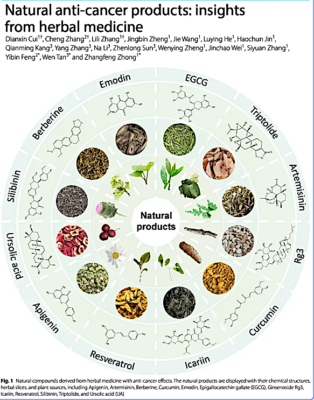
Over 1,100 Studies Reveal 12 Natural Compounds With Potent Anti-Cancer Effects Across All Major Tumor Pathways NICOLAS HULSCHER, MPH NOV 25, 2025 Read full story
[Ed.:
Introducing the Hippocratic Society By STANLEY KURTZ
November 12, 2025 National Review
Conservatives should welcome a new group, the Hippocratic Society, which will appeal to medical students and physicians of varied political stripes but will be particularly friendly to conservatives who might otherwise find themselves relegated to the margins of the medical profession.
The Federalist Society is a helpful, if imperfect, analogy. Like the Federalist Society, the Hippocratic Society will be a place where conservative views are hosted and put into debate with progressive perspectives. And undoubtedly, conservative-leaning medical students will find colleagues and mentors among its members.
The Hippocratic Society has another function as well, however, not fully paralleled by its legal cousin, and likely to appeal regardless of political perspective. HippSoc (the abbreviated name of the group) addresses the closely related problems of physician burnout and the bureaucratization of medicine, modeling a return to human-scale doctoring. In furtherance of this, HippSoc reconnects doctors to the philosophical and religious roots of medicine, cultivating an active appreciation of the profession’s higher purpose. HippSoc’s activities on this front will surely appeal to many physicians and medical students, politically conservative or not.
Medicine is arguably more insulated from politics than is law, so the analogy between the Hippocratic Society and the Federalist Society is imperfect. On the other hand, as America’s political-cultural controversies have proliferated, medicine has been anything but immune. Familiar disagreements over abortion have lately been augmented by differences over child gender transition surgery, physician-assisted suicide, Covid, DEI, and the government’s role in health care.
The Hippocratic Society takes no position on these controversies. Nor, as many will be surprised to learn, does the Federalist Society take formal positions on major controversies in law and public policy. What both groups do instead is to facilitate debate on issues that the dominant professional orthodoxy would prefer to treat as settled.
As my Ethics and Public Policy Center colleague and NRO Bench Memos blogger Ed Whelan has explained, sponsoring debates with progressive critics, rather than simply confining itself to conservative speakers, has been the secret of Federalist Society success. This, Whelan says, has kept the organization open and attractive to outsiders, moderated factional conflict, and prevented members’ ideas from going stale. Back when I was advocating for state-level legislation to protect campus free speech, for example, I was invited to debate my proposal with a progressive critic before the Federalist Society of Washington, D.C. The Hippocratic Society clearly draws on this FedSoc model.
As Whelan points out, the Federalist Society itself generally steers clear of endorsing particular policy proposals. Most complaints about the Federalist Society, Whelan says, are really complaints, not about anything the organization itself has done but rather “about things done or said by individuals in the broader network it has helped to build.” Again, from what I can see, the Hippocratic Society plans to operate on the same basis.
That said, HippSoc will undoubtedly sponsor talks on controversial issues by conservative-leaning physicians affiliated with the group. As an example of what we’re likely to see from HippSoc, consider this 2023 talk at the University of South Carolina by Dr. Farr Curlin, a HippSoc board member and co-founder: “What Does Conscience Have to Do with Healthcare?” Curlin’s talk conveys the core argument of his 2021 book with Christopher Tollefsen, The Way of Medicine: Ethics and the Healing Profession.
In his talk, Curlin illuminates a key divide in contemporary medicine by setting up a contrast between what he calls the “provider of services model,” on the one hand, and his own “way of medicine,” on the other. The provider of services model, broadly supported by physicians like Ezekiel Emanuel (probably the most influential American physician on policy issues during the Obama years), holds that doctors are essentially service providers to patient consumers. Therefore, should doctors attempt to withhold professionally approved and patient requested services or procedures (like abortion, physician-assisted suicide, or so-called gender affirming care) on grounds of conscience, they should be penalized in some way. Some even argue that doctors should be prohibited from exercising conscience refusals altogether. The core idea here is that a patient’s autonomous determination of what is required for his or her well-being must be accepted by the doctor (unless it violates standard medical practice, e.g., antibiotics should not be prescribed for viral infections).
By contrast, Curlin’s “way of medicine” is grounded on the Hippocratic imperative to do no harm. In this view, the patient’s subjective desires must give way to objective assessments of the harms to health of procedures like abortion, physician-assisted suicide, and gender transition surgery. Curlin argues that conscience refusals are not based on a doctor’s mere personal beliefs or prejudices (as the provider of services perspective claims), but on knowable determinations that some medical procedures are destructive of health. And Curlin not only makes this case, but very effectively exposes the raft of contradictions that beset the standard “provider of services model.”
This is why the Hippocratic Society is needed. It’s evident that the medical profession’s dominant orthodoxy turns progressive moral and political preferences into officially recognized “truths” and does so in a way that, over time, will strip conservatives of their right to practice medicine, or at least severely curtail it. Unless state legislators are able to hear doctors like Curlin critique progressive orthodoxy, there’s a risk that progressive assumptions, improperly elevated into professional truths, will be enshrined in state law. While the Hippocratic Society won’t be officially endorsing any policy perspective, it will provide the kind of platform for individual advocacy and collective debate that can rightly deprive the progressive left of the medical policy monopoly it seeks.
Also, as noted above, the Hippocratic Society is dedicated to revisiting the deeper purposes of the medical profession in ways that will appeal to physicians of many political stripes. Physician burnout is a growing problem, exacerbated by proliferating bureaucratic rules and complex formulae for calculating compensation. Too often, the result is that doctors’ time with their patients is shortened and their scope for exercising professional judgment limited. Yet medicine’s core satisfactions grow out of the doctor-patient relationship and the related art (not just technical skill) of medical judgment. The shrinking human component of doctoring is the deeper cause of burnout. It’s gotten to the point where medical students are sometimes subtly discouraged by older physicians from pursuing the profession.
HippSoc addresses the problem by unpacking (over a meal shared by medical students and more senior professionals) case studies that require of the physician an exercise of various virtues, like compassion, curiosity, devotion, fortitude, hope, humility, integrity, and such. The discussions draw on everything from clinical experience to the ethics of Aristotle to address real-life dilemmas. So, for example, what difference would — or should — it make to the stress of treating severe gunshot wounds in a trauma room, knowing that the victim was a pastor trying to break up a fight, rather than a gangbanger?
The Hippocratic Society also sponsors a series of podcasts that tackle similar issues, everything from the challenge of particularly difficult patients to the implications of “new natural law” theory for medicine. In one episode, a particularly powerful anecdote (24:45 min.—27:20 min.) conveys some of the core ideas behind the Hippocratic Society’s approach to medical virtue.
As this story goes, a medical team of plastic surgeons visited Guatemala to operate on severe burns, cleft lips, and cleft palates. Patients were booked in advance, and the list was full. Then a man with cleft lip and cleft palate who lived 30–40 miles away heard about the clinic, traveled to the site, and begged to be operated on. He was told that the list was full and that he’d have to wait a year for the next visit. This man then slept on the stairs at the entrance to the clinic for five days straight. As the clinic’s time was ending and the team was breaking down the operating room, one of the doctors said he was going to operate on the man out of turn. Everyone agreed to stay. It took hours of extra work as they operated on both the palate and the lip in one sitting (contrary to conventional practice). The procedures were highly successful. This meant more work and more exhaustion for the doctors, and of course it contravened the bureaucratic constraints. Yet the patient was healed, and the doctors got some profound and lasting satisfaction for their trouble.
Something more should be said about the Hippocratic Society’s name. Hippocrates of Cos (ca 460–370 B.C.) was the father of ancient Greek medicine. He initiated the medical tradition ancestral to our own, grounded in meticulous empirical observation. Hippocrates is most famous, of course, for his oath, the code of medical ethics that many or most modern doctors once swore to uphold. The original Hippocratic oath forbade both abortion and physician-assisted suicide. Most medical schools therefore now either forgo the oath altogether or rewrite it to modify or eliminate those and other provisions.
Most Hippocratic Society members, by contrast, tend to remain loyal to the original oath and to the more encompassing “do no harm” morality that lies behind it. Also, as we’ve seen, HippSoc works to revive knowledge of the philosophical and religious (Jewish, Christian, and Muslim) foundations of medicine, going back as far as Aristotle. It’s a return to medicine in the great tradition.
I only recently learned about the Hippocratic Society from my EPPC colleague Aaron Kheriaty, who is on the group’s board, and immediately realized that news of a medical counterpart to the Federalist Society would be of interest to conservatives generally.
Dr. Kheriaty’s new book, Making the Cut: How to Heal Modern Medicine, explores the problem of physician burnout and the numerous other ailments besetting his profession. Toward the end of the book, Kheriaty calls for the creation of a series of alternative medical institutions to help shift the profession’s current direction. Sounds like a good idea to me. Stanley Goldfarb’s group, Do No Harm, which addresses the harmful effects of identity politics on medicine, is another excellent example of the sort of thing that is needed, I’d say.
The Hippocratic Society is growing rapidly. When Kheriaty wrote his book, published in September of this year, HippSoc chapters for premedical and medical students had been established at nine universities. I now count 28. (If you’d like to join, or start a chapter of your own, go here.)
What Kheriaty recommends for medicine applies more broadly. We need to establish a set of alternative institutions across many fields of endeavor in order to break monolithic progressive control of our institutions under the guise of “professional” consensus. The Federalist Society established the model. The Hippocratic Society, with modifications, continues it. With luck, we’ll see yet more to come.
[Ed.:
The Dam Is Breaking: We’re Making America Healthy Again A MIDWESTERN DOCTOR
The remarkable changes on the horizon and forces conspiring to stop them
DEC 07, 2025
At a young age, after becoming aware of many of the issues in the world, I gradually got pulled into an addictive sea of negativity and frustration over how things were and the fact they kept getting worse. As this was not healthy or productive, in time, I decided the best way to cope with this situation was to shift my focus on what I could do to make things better and be at peace with the fact I was doing something rather than torn apart over everything I wished was different but was powerless to change.
Because of this, my focus gradually shifted to seeing the existing trends in society (e.g., more medical corruption and increasingly dangerous pharmaceutical regimens being forced upon the public) and trying to identify any possible window to shift them. This perspective, for instance, both allowed me to avoid becoming completely distraught over what unfolded during COVID-19, and likewise to keep searching for a way to help avert the catastrophic course we were on, even though doing this seemed nearly impossible, given the monolithic forces we were against.
Likewise, I long ago accepted that the bulk of the medical system and leadership in the government will be incapable of deviating from the pharmaceutical industry’s narrative, regardless of how much those beliefs are at odds with reality or what the public wants. As such, rather than become upset about the continual abhorrent revelations that come out (e.g., all the ways the FDA and CDC covered up COVID vaccines and injuries and death), I’ve simply been grateful we’ve entered a political climate where those revelations can come out.
Making America Healthy Again
Due to how much influence the pharmaceutical industry has over the government and media, until fairly recently, I never imagined a group that would directly oppose their interests could come into power. Yet, due to the public backlash against the egregious profiteering we saw throughout COVID-19, the convergence of a few longstanding political trends (e.g., the Tea Party moving vaccine skepticism into the Republican Party) and Trump requiring RFK Jr.’s political coalition to win the 2020 election—it did.
Because of this, we are now again in a situation of “glass half empty or half full” situation, as on one hand, it is beyond extraordinary RFK Jr. became the H.H.S. Secretary while on the other, it’s disappointing that he has not yet enacted many of the policies we wanted done on day one.
Presently, I am in the former camp, in part because of how much opposition we’ve had to overcome to get things to where they are currently (which has taken a lot of work on our part) and because, knowing the forces he is up against, I feel that if I were the Health and Human Services (HHS) Secretary, I would have gotten much less done at this point than RFK Jr. has.
Likewise, as hard as it is to get things done now (e.g., health bureaucrats throughout the HHS are continually trying to sabotage RFK Jr.’s efforts), I know things will become infinitely more challenging after the next election when there is no longer strong top down support to enact MAHA policies. So, were I in RFK Jr’s position, my own focus would be directed towards using the once in a lifetime window we have right now to enact long term structural changes rather than focusing on short term gains that will be swept away by the next administration.
I mention all of this because currently, the playbook the pharmaceutical industry seems to be using to kill our window to change things is to stall and delay things as much as possible so that by the time RFK Jr.’s term ends, nothing will yet have gotten done to enact those critical long-term changes. As such, our focus has been on trying to counteract each approach being used to stall Making America Healthy Again (e.g., that’s why we’ve put so much work into exposing the financial conflicts of interest Congressmen and Senators actively sabotaging MAHA have).
Presently, one of the primary tactics being used to obstruct MAHA has been to split the base so they fight against each other rather than uniting behind their shared goal (as this is one of the most reliable ways to fracture populist movements) by shifting our focus from what is getting done to what is not getting done as it is critical for the pharmaceutical industry that the MAHA support which won 2024 is not present for the 2026 midterms.
Note: a lot of influencers are trying to promote this black-pilled message about MAHA. Many believe this is being funded by the industry, but I feel it is equally plausible that those influencers are simply chasing clicks (as negativity and hysteria are the easiest forms of journalism to market).
Because of this, I firmly believe our focus at this point should be on what we can do to make things better and thankful for each previously impossible thing we enact.
The CDC Vaccine Schedule
I have long believed inertia, beyond being a physical principle, also applies to groups and bureaucratic structures. This is why, for example, as the years go by, more and more increasingly dangerous vaccinations get “recommended” (mandated) for all of our children, and why regardless of the evidence against them, virtually every vaccine will be added to the CDC vaccine schedule and none will ever be withdrawn from it.
I feel this was best highlighted by the COVID vaccines for children, as the risk of death from COVID in children was effectively zero (as the only known cases were in severely immunocompromised individuals), while conversely, there were many cases of healthy children dying suddenly in a similar manner after vaccination. Yet, despite the mortality benefit clearly favoring not vaccinating, and this specific “recommendation” provoking more public pushback than any other childhood vaccine policy in history, the entire medical apparatus continued to double-down on it.
As such, while many felt differently, I was pleasantly surprised that it only took RFK Jr. 15 weeks (from taking office) to lay the necessary groundwork to remove the COVID vaccine from the childhood vaccine schedule—particularly since the last time a vaccine was taken off the childhood CDC schedule (excluding occasional instances where one was replaced with a newer version) was the smallpox vaccine in 1972.
Note: RFK’s decision to stop recommending the COVID vaccines to children and pregnant women (which had serious unresolved safety concerns) was met with widespread opposition, eventually resulting in numerous Democrat states breaking from the CDC to adopt their own (COVID including) vaccine schedules and Senate hearings against RFK Jr.
Despite this pushback, I was nonetheless hopeful MAHA would then turn their attention to the next most unjustifiable vaccine on the CDC schedule, newborn Hepatitis B vaccination (and possibly also consider questioning the other particularly egregious vaccination—the HPV vaccine Gardasil).
Because of this, once RFK replaced the membership of ACIP (the committee that crafts the CDC’s vaccine schedule) with ACIP members not beholden to the pharmaceutical industry and I learned (in September) that the newborn hepatitis B was up for discussion, we began a large project to try and bring public awareness to the very real dangers of this vaccine and the fact there was no justifiable reason to give it to every newborn.
Remarkably, despite numerous attempts to delay and sabotage this (along with widespread hysteria from the medical field), on Friday, a vote was finally held and at long last—and thanks to a variety of things coming together (e.g., many of you hearing the call and making your voices heard on the issue), something many of us, for decades, never imagined could happen—the hepatitis B vaccine was removed from the infant vaccine schedule.
Even more remarkably, immediately afterwards, President Trump, building on this momentum, made a rather extraordinary announcement that again illustrates we are in a historic window most of us previously never imagined would occur.
STUDY: Common Vaccines Linked to 38-50% Increased Risk of Dementia and Alzheimer’s NICOLAS HULSCHER, MPH
The single largest vaccine–dementia study ever conducted (n=13.3 million) finds risk intensifies with more doses, remains elevated for a full decade, and is strongest after flu and pneumococcal shots.
DEC 07, 2025
The single largest and most rigorous study ever conducted on vaccines and dementia — spanning 13.3 million UK adults — has uncovered a deeply troubling pattern: those who received common adult vaccines faced a significantly higher risk of both dementia and Alzheimer’s disease.
The risk intensifies with more doses, remains elevated for a full decade, and is strongest after influenza and pneumococcal vaccination. With each layer of statistical adjustment, the signal doesn’t fade — it becomes sharper, more consistent, and increasingly difficult to explain away.
And critically, these associations persisted even after adjusting for an unusually wide range of potential confounders, including age, sex, socioeconomic status, BMI, smoking, alcohol-related disorders, hypertension, atrial fibrillation, heart failure, coronary artery disease, stroke/TIA, peripheral vascular disease, diabetes, chronic kidney and liver disease, depression, epilepsy, Parkinson’s disease, cancer, traumatic brain injury, hypothyroidism, osteoporosis, and dozens of medications ranging from NSAIDs and opioids to statins, antiplatelets, immunosuppressants, and antidepressants.
Even after controlling for this extensive list, the elevated risks remained strong and remarkably stable.
Vaccinated Adults Had a 38% Higher Risk of Dementia
The primary adjusted model showed that adults receiving common adult vaccines (influenza, pneumococcal, shingles, tetanus, diphtheria, pertussis) had a:
38% increased risk of developing dementia (OR 1.38)
This alone dismantles the narrative of “vaccines protect the brain,” but the deeper findings are far worse.
Alzheimer’s Disease Risk Is Even Higher — 50% Increased Risk
Buried in the supplemental tables is a more shocking result: when the authors restricted analyses to Alzheimer’s disease specifically, the association grew even stronger.
50% increased risk of Alzheimer’s (Adjusted OR 1.50)
This indicates the effect is not random. The association intensifies for the most devastating subtype of dementia.
Clear Dose–Response Pattern: More Vaccines = Higher Risk
The authors ran multiple dose–response models, and every one of them shows the same pattern:
Dementia (all types)
From eTable 2:
- 1 vaccine dose → Adjusted OR 1.26 (26% higher risk)
- 2–3 doses → Adjusted OR 1.32 (32% higher risk)
- 4–7 doses → Adjusted OR 1.42 (42% higher risk)
- 8–12 doses → Adjusted OR 1.50 (50% higher risk)
- ≥13 doses → Adjusted OR 1.55 (55% higher risk)
Alzheimer’s Disease (AD) Shows the Same—and Even Stronger—Trend
From eTable 7:
- 1 dose → Adjusted OR 1.32 (32% higher risk)
- 2–3 doses → Adjusted OR 1.41 (41% higher risk)
- ≥4 doses → Adjusted OR 1.61 (61% higher risk)
This is one of the most powerful and unmistakable signals in epidemiology.
Time–Response Curve: Risk Peaks Soon After Vaccination and Remains Elevated for Years
Another signal strongly inconsistent with mere bias: a time-response relationship.
The highest dementia risk occurs 2–4.9 years after vaccination (Adjusted OR 1.56). The risk then slowly attenuates but never returns to baseline, remaining elevated across all time windows.
After 12.5 years, the risk is still meaningfully elevated (Adjusted OR 1.28) — a persistence incompatible with short-term “detection bias” and suggestive of a long-lasting biological impact.
This pattern is what you expect from a biological trigger with long-latency neuroinflammatory or neurodegenerative consequences.
Even After a 10-Year Lag, the Increased Risk Does Not Disappear
When the authors apply a long 10-year lag — meant to eliminate early detection bias — the elevated risk persists:
- Dementia: OR 1.20
- Alzheimer’s: OR 1.26
If this were simply “people who see doctors more often get diagnosed earlier,” the association should disappear under long lag correction.
Influenza and Pneumococcal Vaccines Drive the Signal
Two vaccines show particularly strong associations:
Influenza vaccine
- Dementia: OR 1.39 → 39% higher risk
- Alzheimer’s: OR 1.49 → 49% higher risk
Pneumococcal vaccine
- Dementia: OR 1.12 → 12% higher risk
- Alzheimer’s: OR 1.15 → 15% higher risk
And again, both exhibit dose–response escalation — the hallmark pattern of a genuine exposure–outcome relationship.
Taken together, the findings across primary, supplemental, dose–response, time–response, stratified, and sensitivity analyses paint the same picture:
• A consistent association between cumulative vaccination and increased dementia risk
• A stronger association for Alzheimer’s than for general dementia
• A dose–response effect — more vaccines, higher risk
• A time–response effect — risk peaks after exposure and persists long-term
• Influenza and pneumococcal vaccines strongly drive the signal
• The association remains after 10-year lag correction and active comparator controls
This is what a robust epidemiologic signal looks like.
In the largest single study ever conducted on vaccines and dementia, common adult vaccinations were associated with a 38% higher risk of dementia and a 50% higher risk of Alzheimer’s disease. The risk increases with more doses, persists for a decade, and is strongest for influenza and pneumococcal vaccines.
Epidemiologist and Foundation Administrator, McCullough Foundation
Support our mission: mcculloughfnd.org
Please consider following both the McCullough Foundation and my personal account on X (formerly Twitter) for further content.